Brand Story – The art of telling a story for yours brands
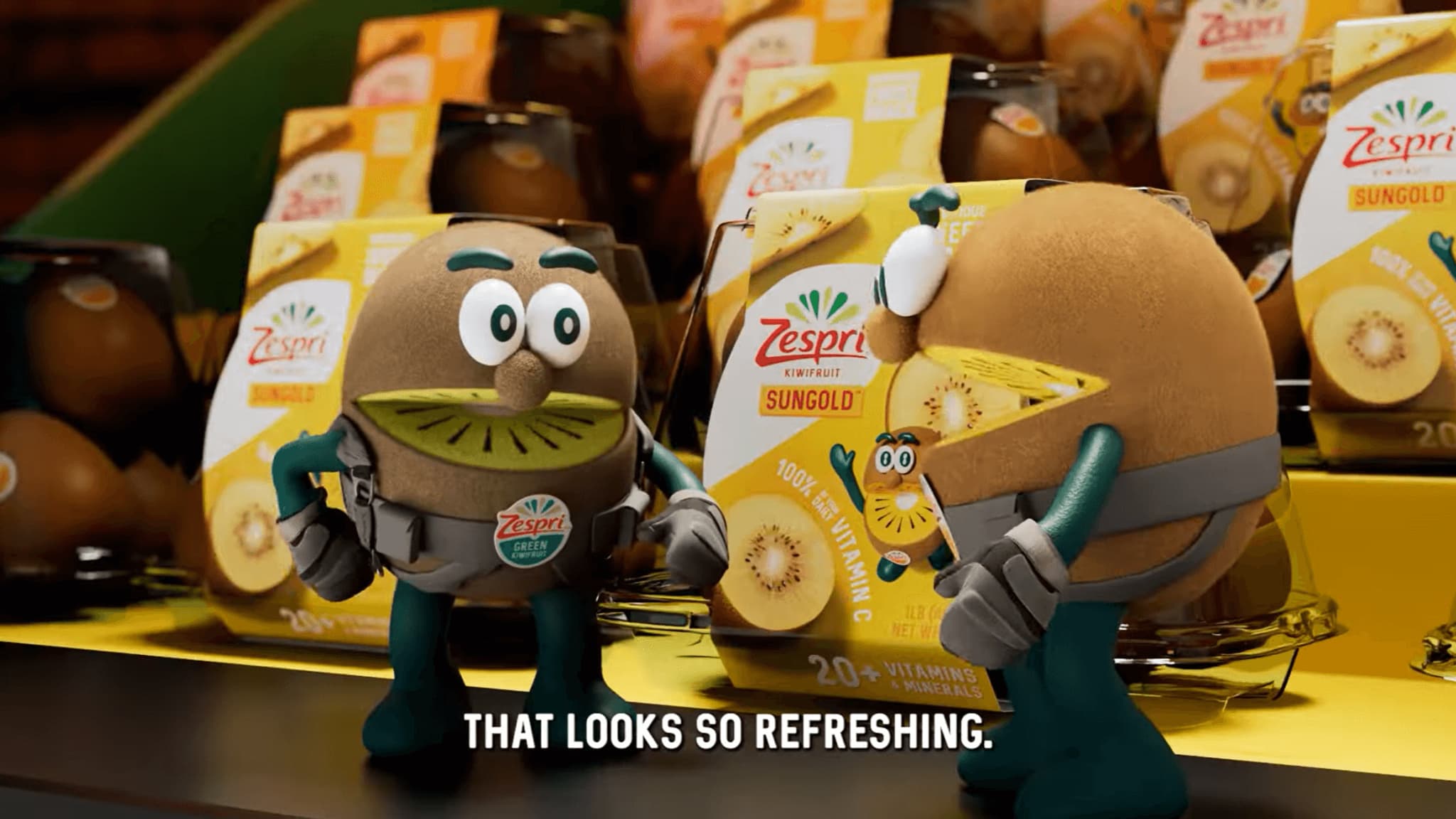
Every brand thinks it has a brand story. But is it really a story people see and feel, or just an About Us section on its website?
Most brands confidently declare, "We have a brand story." Yet, many still confuse a genuine story with mere information. A company timeline, a list of achievements, or a simple "About Us" section isn't necessarily a compelling brand narrative.
In essence, a truly valuable brand story isn't just crafted to impress or boast. It's born from a brand's aspiration to deliver value, designed to live on in the minds and touch the emotions of customers. People may forget what you tell them, but they'll always remember how your story made them feel. In a world saturated with fleeting information, an authentic brand story goes far beyond marketing. It must be a story that others trust, understand, and feel compelled to share themselves.
1. What is a brand story?
A brand story is essentially the narrative a brand chooses to tell about itself. Most brand stories will touch upon their founding history, origins, core values, and the mission they aim to convey.
However, a brand story goes far beyond a simple recounting of facts. It is, in essence, the soul of the brand, acting as an emotional thread that helps customers truly grasp who you are and why they should choose what you offer.
Life is a series of stories that flow into one another, and everyone has their own tales to tell. Brands are no different. A brand story isn't just about detailing the hurdles, struggles, or how a brand overcame countless competitors to achieve its current strength. The most profound significance of a brand story lies in its ability to forge powerful "emotional connection points" between the business and its customers.
A clear demonstration of the emotional power of brand story is TOMS, a shoe company from the United States with the “One for One” model. For every pair of shoes sold, they donate another pair to children in difficult circumstances.
This humane story originates from the real experience of Blake Mycoskie - the founder of TOMS. After a trip to Argentina, he witnessed many children walking barefoot, vulnerable to rocks and diseases.

TOMS - “One for One”
Determined to create change, he built a brand with a commitment that every pair of shoes sold will bring another pair of shoes to children in need. It is this simple, humane story that turns the act of buying into a kind act, making customers feel like they are contributing to something positive.
Thanks to that, TOMS does not simply sell shoes but also builds a community of people who “want to buy to help”, creating a deep and sustainable relationship between the brand and consumers.
2. Don’t confuse storytelling with a brand story
Storytelling and a brand story are two concepts that show up everywhere in marketing, especially in branding campaigns that rely on the power of narrative. But in reality, they differ greatly in both definition and how they’re used.
Storytelling
Storytelling or the art of using stories is about using narrative as a method to deliver a message. Storytelling often happens within a short time frame: think of a 30-second commercial, a short article, or a quick piece of content. Beyond branding, storytelling is widely used across many areas from education and science to art and entertainment.
It’s like the lessons we grew up with, the moral behind The Tortoise and the Hare. If the hare hadn’t been so overconfident, he wouldn’t have lost a race he should have easily won. That timeless story sticks because it wraps a simple truth inside a narrative people can remember, share, and learn from. That’s the real power of storytelling: it makes a message stick through emotion and meaning.
Brand story
A brand story focuses more on building a narrative that’s uniquely branded, one that expresses a company’s core values, vision, and identity. This is not a one-off tactic; it’s part of shaping a brand’s image over time, threading through everything the business says and does. The ultimate goal of a strong brand story is to build trust, evoke empathy, and create a deeper emotional bond with customers.
While they differ in scope and duration, storytelling and a brand story often work hand in hand. Storytelling is one of the tools that make a brand story engaging and memorable, it helps bring your brand’s values to life and invites people to connect with what your brand truly stands for.

Cao Minh Tailor - "Vietnamizing Western clothing"
The brand story of Cao Minh Tailor not only revolves around the journey of its establishment since 1948, but also the journey of more than 70 years accompanying customers through important milestones in their lives. From the founding generation to the present day, Cao Minh has always been loyal to the philosophy of "Vietnamizing Western clothing" - respecting the structure of Western clothing, but adjusting it to suit the body and style of Vietnamese people.
The storytelling in this brand story is clearly shown through the personalization journey for each customer's suit. Each person who comes to Cao Minh brings their own story, a big milestone, a new beginning.
The brand focuses on listening, consulting, designing individually and meticulously processing for each person. Each product is tailored according to bespoke standards, showing respect for the personality and personal mark of the wearer. It is this approach that has created a lasting emotional connection between Cao Minh and customers, through many generations.
3. How to build a brand story that feels both meaningful and magnetic
Your brand story is how you show your audience who you are, what you stand for, and why they should choose you.
Before you begin telling that story, take a moment to answer these key questions:
- What is your brand and what does it do?
- What are the core values your brand represents?
- Who is your target audience - the people you're really trying to connect with?
- What are the defining moments in your brand’s journey so far?
These questions help you shape a story that speaks to the right people, a story that doesn’t just sound good but feels relevant. And when it resonates, it sets you apart from others in a way that marketing alone never could.

Mailchimp's brand story
Mailchimp has successfully applied the method of building a brand story by clearly answering fundamental questions. They position themselves as a friendly email marketing platform, helping small businesses easily leverage the power of email marketing. The core values that Mailchimp pursues include friendliness, ease of use, creativity, and a commitment to supporting businesses to develop sustainably. Their target customers are small business owners, non-technical people, who need a simple but effective tool to connect with customers.
Thanks to that, Mailchimp's brand story is not simply about an email marketing tool, but also about a reliable companion, helping small businesses grow steadily. This story resonates strongly with customers, contributing to Mailchimp's leading position and widespread love in the market.
Once you’ve laid that foundation, you can begin crafting your story with the following key elements:
Highlight the turning points

The classic tale of Little Red Riding Hood
Think about the classic tale of Little Red Riding Hood. Without the cunning wolf, the story would be nothing more than a girl delivering pastries to her grandmother and that’s the end of it. No tension, no challenge, no reason to retell it for generations. It’s the wolf that makes the story stick. The unexpected challenge gives the plot weight and gives the girl a chance to reveal her cleverness, her courage, and her love for others.
A story without tension is just a sequence of facts. Easy to tell and just as easy to forget.
The same principle applies to your brand story. If you want it to resonate, spotlight the turning points. The moments you almost gave up and what happened when you didn’t. That’s where meaning is made.
Take Harland Sanders, founder of KFC. His story is anchored in two striking numbers: 65 and 1,009. At age 65, after going bankrupt, he invested his entire government pension into pursuing his business dream. And 1,009? That’s how many times he was rejected before someone finally said yes.
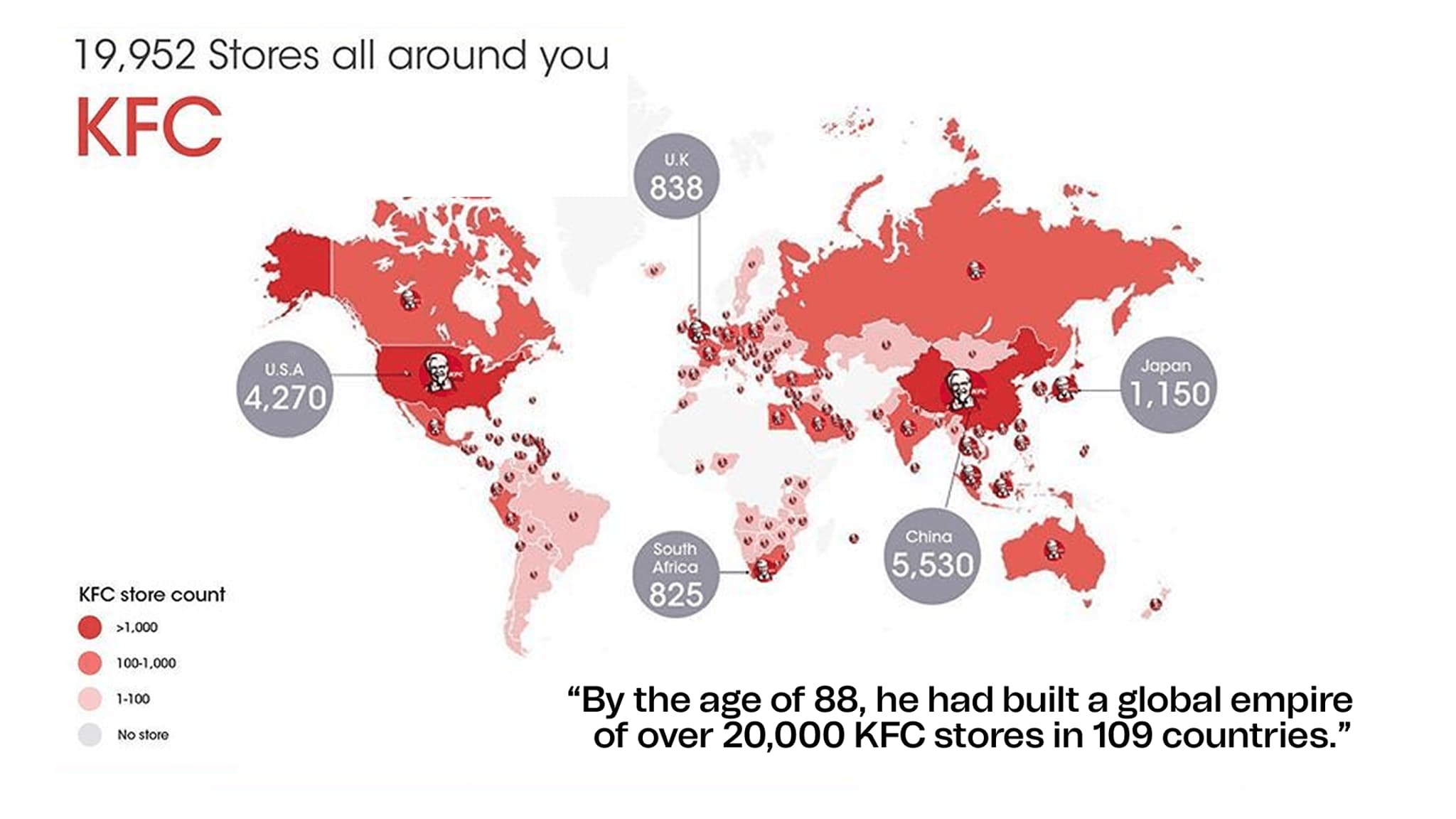
Map illustrating KFC's global presence
By the age of 88, he had built a global empire of over 20,000 KFC stores in 109 countries. Today, with every "bite" of fried chicken, customers don’t just taste flavor, they taste persistence. His story doesn’t just sell food. It fuels belief.
What’s the core message you want to deliver?
The message is the heartbeat of any brand story, and it should be the north star guiding how you shape and tell it. If your story doesn’t convey the key message you want your audience to take away, then no matter how well-written it is, it won’t stick.
One important thing to remember: your message should be clear, accessible, and emotionally relevant to the majority of your audience. If the narrative is overly academic or packed with layers of meaning that require deep decoding, your message might never land where it matters with your customers.
Let’s rewind to 2023, when GrabFood (Grab’s food delivery service) launched its “Đừng bỏ bữa” (Don’t skip meals) campaign. Understanding that meals are often the most important part of the day, especially for those living away from home and hustling through life’s chaos. GrabFood crafted a message rooted in care, empathy, and everyday relevance.

GrabFood launched its “Đừng bỏ bữa” campaign
With this campaign, the brand didn’t just promote a product. It raised awareness around something deeply human: the simple but often neglected act of nourishing yourself. It showed customers that GrabFood gets them, and that kind of message is what builds a long-term connection.
How did you overcome the challenge?
If your brand story only introduces obstacles without ever resolving them, it becomes little more than an unsolvable equation, a narrative without meaning. Once you’ve shared how your business began and the struggles you’ve faced along the way, that’s the moment your audience needs something more - a resolution that gives the journey purpose.
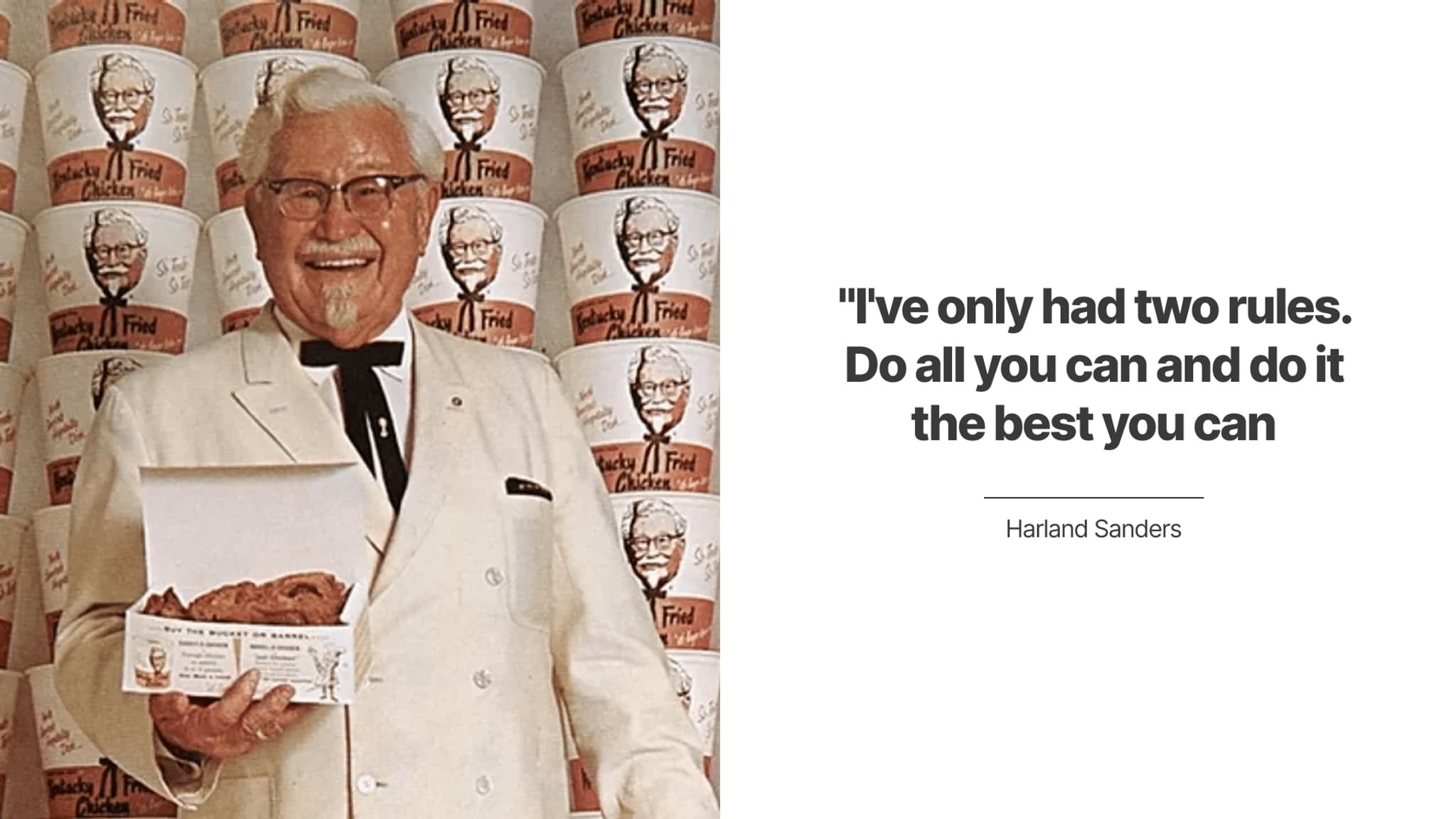
Think about Harland Sanders - the man behind KFC. If he had never succeeded, would we still remember his story as one of grit and perseverance? Or would it simply be seen as a man chasing a dream that never came true?
This is why it’s essential to speak about how you overcame challenges. Every great brand story needs its breakthrough moment, and that moment should be told with honesty.
Because in the end, the goal of a brand story isn’t to impress, it’s to connect. And people connect with what feels real. When your story is honest, grounded, and human, that’s when it truly earns the right to be remembered.
4. Wrap-up
A brand story isn’t something you write once and file away. It takes shape and evolves through every product you create, every experience you deliver, and every value you consistently uphold. The brands we remember aren’t those that tell the flashiest stories, they're those ones live their story with clarity, intention, and honesty. A brand story isn’t just meant to be told. It’s meant to be trusted, felt, and carried forward day after day.