
Thanh Nguyen

A report from the “Better Briefs” project reveals that 89% of marketers and 86% of agencies consider the absence of a good creative brief to be one of the biggest challenges in producing high-quality creative work. This statistic highlights how both marketers and agencies recognize the importance of a clear and detailed creative brief in guiding a project.
Yet, ironically, 90% of marketers and 92% of agencies admit that creative briefs are either overlooked or not properly developed during the process. Why is something so crucial often neglected? In this article, we'll explore what makes a creative brief more than just a piece of paper, how to make it a strategic tool, and why it holds the key to creative success.
In a creative project, the brief plays a crucial role in guiding the process. However, not all briefs are the same. The truth is that there are different types, each playing a unique role in shaping the creative process. So, before diving deeper into what makes a good creative brief, let's take a moment to explore the two main types of brief:
While the client brief focuses on what needs to be achieved, the creative brief zooms in on how to make it happen. It's not just a document — it's a strategic tool that helps the creative team stay focused, ensuring that the final work aligns with the client's business goals and is executed effectively.
In many projects, we often dive straight into brainstorming ideas or designing while the creative brief, seemingly just a formality, gets pushed aside. Maybe we've been overlooking something essential. We understand that the creative brief deserves more attention than it is often given and should not merely be seen as a formality. Let's take a closer look at why the creative brief is vital for the success of any project and why we treat it as a fundamental part of our creative process.
Imagine starting a journey without a map or GPS. While you might stumble upon some interesting sights, you'll likely waste time and energy trying to find your way. That's exactly what a creative brief does for a project: it's the map that provides clear direction from start to finish.
We know that a clear and well-thought-out brief is essential to ensure everyone on the team understands the goals, the target audience, and the creative direction. It keeps us guaranteeing every team member knows exactly where they're headed and why. Without this guide, creative teams can easily lose focus and end up with work that misses the mark.

The creative brief is the guiding compass of the project.
Collaboration is the heart of great creative work, and a creative brief serves as the glue that brings together diverse talents. By clearly outlining the project's goals and expectations, the brief ensures that everyone from strategists to designers to project managers is aligned.
This shared understanding makes teamwork smooth and efficient, as each person knows their role and how their contributions fit into the bigger picture. Like a well-conducted orchestra, a project with a clear brief brings different perspectives together, turning them into a unified masterpiece.
The creative brief is also a constant reference throughout the project. It acts as a benchmark for evaluating ideas, progress, and final outputs. Whenever a team is at a crossroads or needs to assess the work, they can turn to the brief to ensure it aligns with the original objectives. This keeps the project grounded, prevents scope drift, and helps the team deliver work that's not only creative but also strategically sound.
A creative brief is not just a formality, it’s an opportunity to inject fresh energy into ideas and view the project from a new perspective. However, the challenge lies in whether the client or creative team truly harnesses this potential. If they don’t, the brief can easily become an ineffective document that fails to achieve the desired results.
Creative briefs can easily get caught up in minor details like color choices, typography, or logo placement, causing the core objectives to be overlooked. While these elements are important for aesthetics, if they are not framed within a broader strategy, they risk distorting the message and undermining the campaign’s main goals.
The true purpose of a creative brief is not just to list tasks but to clearly define the challenges the client is facing, along with their core values, mission, and vision. When the focus is placed on solving consumer problems and understanding why they are not engaging with the product, the creative team can develop solutions that are aligned with the strategy and deliver the expected results.
Creative briefs often provide only basic differentiators about a brand, such as:
While these details help the creative team gain a general understanding of the brand or product, they are not deep enough to inspire truly unique and compelling creative ideas. To generate breakthrough concepts, more elements are needed, fresh perspectives, or new data that can spark creativity and encourage thinking beyond conventional boundaries. These insights serve as the foundation for bold ideas, helping the team move away from clichés and toward work that resonates on a deeper, emotional, and value-driven level.
The questions posed in a creative brief are just as important as the answers it expects to receive. Asking vague questions like "Who is the target audience?" often leads to broad, generic responses.
Instead, it's more effective to ask specific, thought-provoking questions like, "What are the core values that must be reflected in the design?" or "How can our visual identity differentiate us from competitors?" These kinds of focused questions encourage deeper thinking and generate more meaningful insights that can drive the project forward.
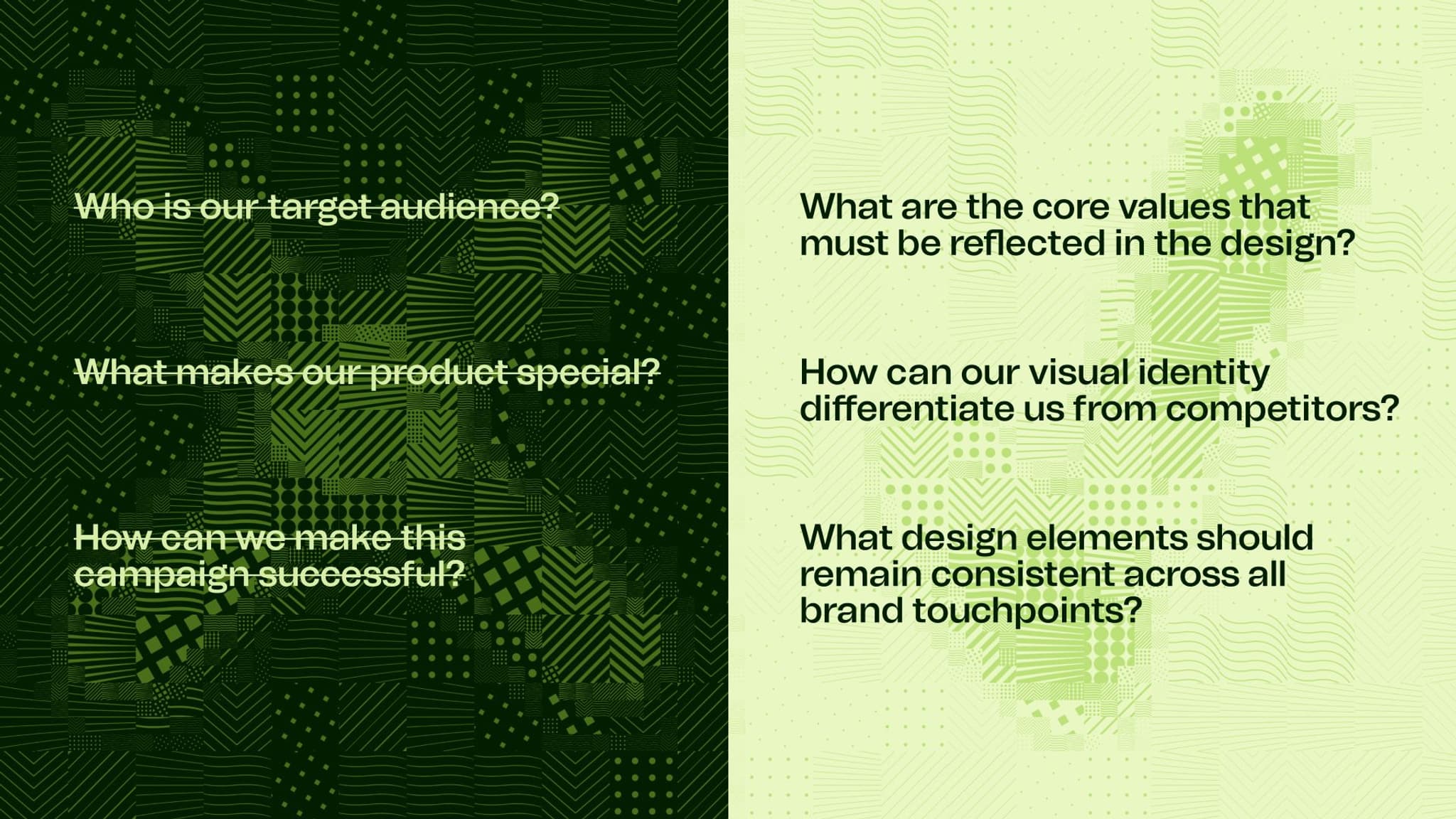
Incorrect and correct questions when writing a brief
A creative brief is only as effective as the elements it includes. Here's a detailed breakdown of the key components that transform an average brief into an exceptional one.
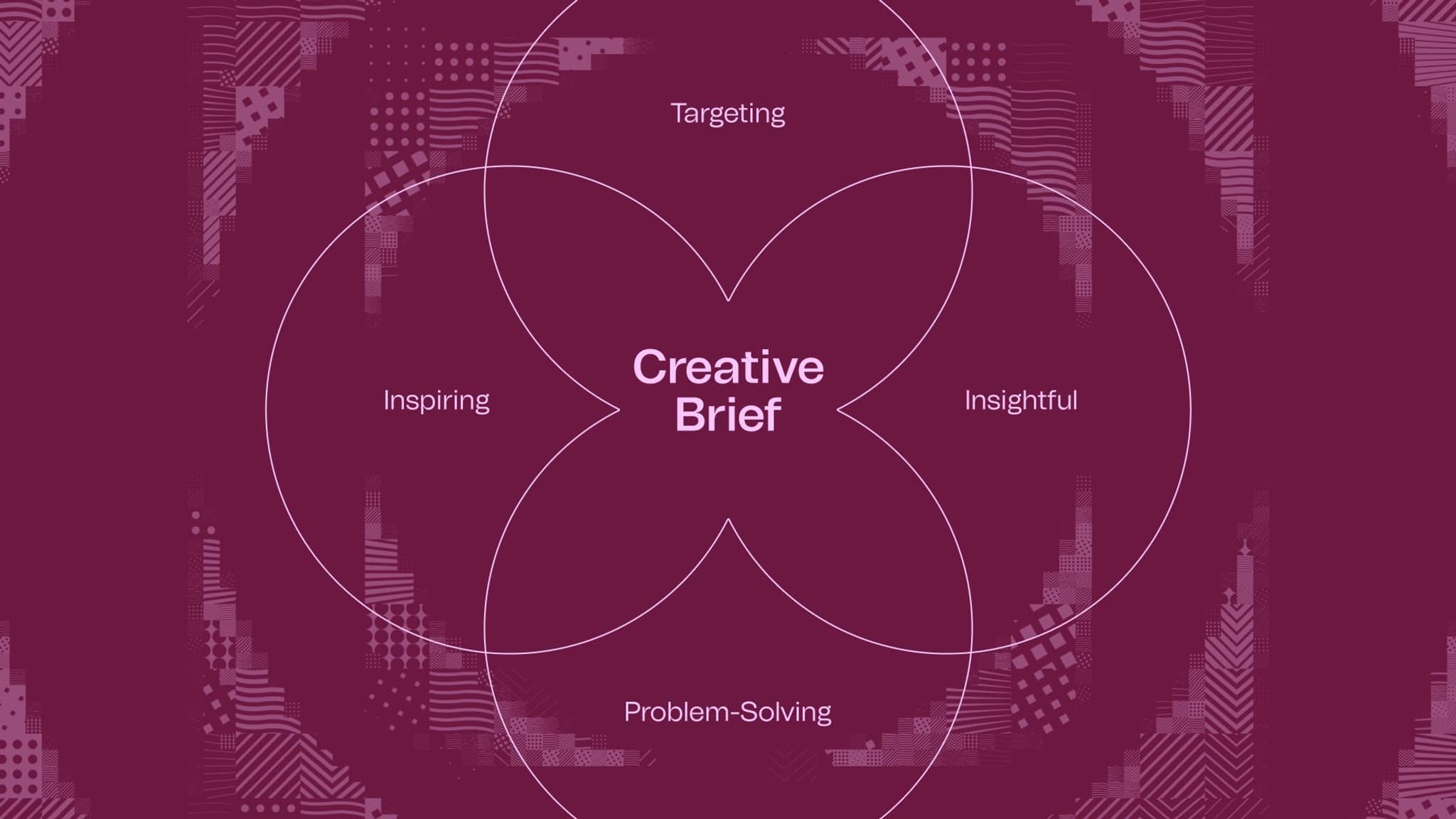
Key elements of an effective creative brief
A survey of Stackinfluence found that 66% of marketers said unclear goals in briefs often caused delays and inefficiencies. This highlights how essential it is to establish a clear focus from the start. Without it, the creative process risks going off track, wasting both time and resources.
Unclear target:
At first glance, this sounds fine, but it's vague.
Clear target:
This version is much more specific. It precisely defines the audience, sets a measurable goal, and provides a clear strategy and timeline for the team to follow. With this level of clarity, the creative team can move forward confidently, knowing exactly what needs to be done and how success will be measured.
A great brief is grounded in research and real-world data. This includes customer feedback, competitor analysis, and market trends. However, it's not enough to simply present the data, it must be interpreted in a way that inspires the creative team.
Practical insights also mean avoiding assumptions. Statements like "Our product is the best in the market" are not useful without evidence or context. Instead, provide facts, such as, "Our product reduces plastic waste by 50%, making it a leader in sustainable solutions." This gives the creative team a concrete starting point to build compelling narratives.
At the heart of every creative brief is a problem that needs solving. For a design project, this could be a challenge like improving user experience, creating a more engaging visual identity, or addressing a gap in the market. The problem should be clearly defined and easy to grasp, allowing the creative team to understand what needs to be fixed or improved.
But a great creative brief doesn't just outline the problem, it sparks potential solutions. Instead of simply stating, "Our website is outdated", a more effective brief might say, "How can we redesign the website to make navigation smoother and more intuitive for our target audience without losing the brand's unique voice?" This framing encourages creative thinking and sets the stage for purposeful, innovative design solutions.
An inspiring creative brief opens up endless possibilities and encourages the team to explore bold, breakthrough solutions rather than being confined to initial ideas. Instead of simply telling the creative team what to do, a strong brief sparks the imagination and invites curiosity, allowing new directions to unfold.
Instead of saying, "Design a new logo for the brand that includes elements of nature, trees, etc.," an inspiring brief could say, "Design a logo that reflects innovation and sustainability, blending tradition with modernity while symbolizing a commitment to both the future and the environment. Think about using organic forms or minimalist designs that convey both the heritage of the brand and its forward-thinking approach."
This approach doesn't just give a direction, it evokes emotion, broadens the creative scope, and empowers the team to push boundaries, resulting in bold, unexpected ideas that not only meet but exceed the brand's expectations.
Crafting a creative brief isn't just about listing tasks; it's about creating a document that blends strategy with creativity, delivering real value to the creative team. To ensure your brief truly works, here are a few key points to keep in mind.
A well-written brief is only useful if everyone understands it. After finalizing the document, schedule a briefing session to present it to the team. Walk them through the objectives, insights, and strategies, and invite questions to ensure clarity. This isn't just about reading the document, it's about aligning everyone on the vision and purpose behind the project.
Consider using storytelling or real-world examples during the presentation to make the brief more relatable and engaging. If the team fully understands the "why" behind the campaign, they're more likely to produce work that aligns with its goals.

Clearly communicate the Brief after completion
Clarity is key in a creative brief. Avoid industry jargon, overly complex sentences, or vague statements. Instead, use simple, direct language that gets to the point. Conciseness doesn't mean oversimplifying, it means stripping away unnecessary words while retaining essential details. The goal is to make the brief easy to read and digest so that anyone on the team can quickly understand its key points.
A well-crafted creative brief isn't something you rush through, it's the tool that empowers a team to unlock bold, boundary-pushing ideas. For CDA, we understand the value of taking the time to craft a brief that's both clear and inspiring because it's the key to guiding every step of the creative journey. We believe that a good brief does more than just set direction; it sparks curiosity and encourages exploration, ensuring our projects stay on track and exceed expectations.