How partnership agencies build sustainable value together

Client-agency collaboration should go beyond tasks to build long-term value. Both must act as strategic partners, shaping meaningful outcomes together.
The client-agency relationship is nothing new. It’s a familiar model - brands need ideas, execution, and expertise; agencies step in to deliver. But the traditional client-agency model doesn’t always hold up in today’s landscape, especially when it’s built around short-term contracts and instant metrics.
It’s no longer just about ticking off deliverables or meeting deadlines. Collaboration today should be seen as a shared journey to create long-term value. When a partnership begins the right way, it lays the foundation for trust and opens the door for the client and agency to grow together, explore new opportunities, and build long-term value.
1. Agency vs Client is a familiar kind of relationship
There’s a common saying in this industry: "Every agency starts with big dreams of transforming brands and making a lasting impact, but too often ends up bogged down in the daily grind of meeting deadlines."
It’s a familiar story, most agency-client partnerships begin with excitement and great expectations, but not every partnership can sustain that energy until the end.
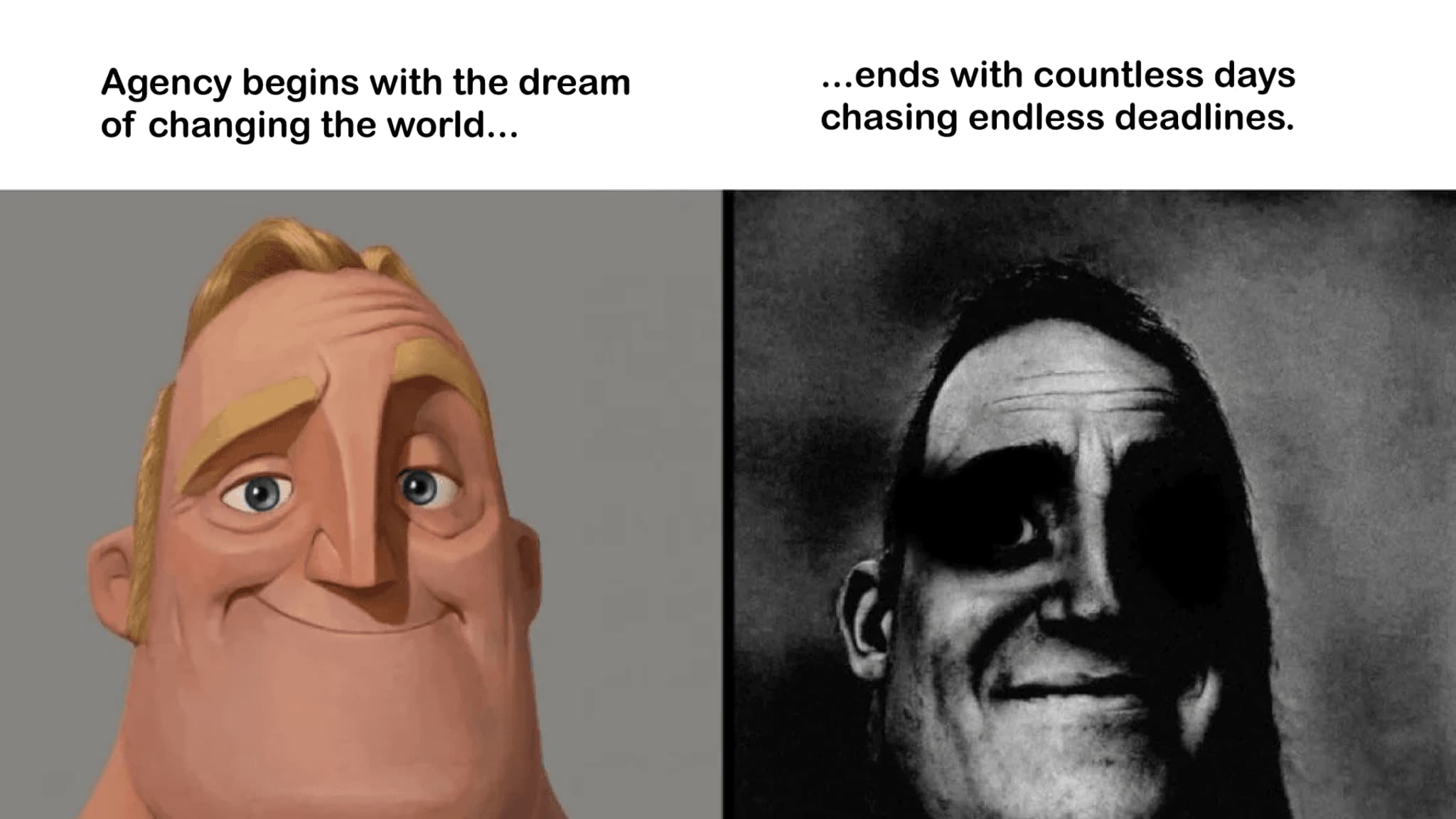
A meme about the partnership between an agency and a client
In the traditional model, partnerships tend to feel transactional: the client provides a brief, and the agency executes. It seems logical, right? Yet, this approach often relegates agencies to the role of service providers instead of strategic partners. This dynamic can lead agencies to prioritize short-term tasks over long-term vision and strategy.
Just when a project starts picking up speed, the moments when client and agency most need to sit down, align on goals, and shape the direction together are exactly the ones that get skipped. Instead, the project rushes ahead, the client hands over the brief, the agency jumps straight into execution, focused on delivering something fast, polished, and on time. On the surface, it may seem like everything is on track. But is it?
2. But sometimes, everything doesn’t go as expected…
If we were to describe the biggest challenge in client-agency relationships in just one phrase, it would be the “expectation gap”. It’s a persistent issue that can easily derail even the most promising partnerships.
Clients often want everything to happen quickly and efficiently, with the most reasonable costs involved. On the other hand, agencies need time, resources, and creative freedom to produce work that delivers real value.
How often have projects started with exciting ideas, only to be watered down by tight budgets or last-minute changes? Clients may want innovative solutions but also demand they be “safe” and “practical,” unintentionally stifling the creativity they hoped for.
When expectations don’t align, communication often breaks down. The client wants A, the account manager understands B, the team executes C, and the final product is? Somehow, it ends up as Z.
And sometimes, even the client isn’t entirely sure what they need. This is why transparency, continuous dialogue, and a willingness to understand each other are vital building blocks for success.
3. So, did the story go off track right from the beginning?
Sometimes, the issue doesn’t lie in the execution, but in how the relationship is set up from the start. When clients approach agencies with a “buyer-supplier” mindset, it often limits the agency’s role to simply delivering tasks. It leaves agencies out of critical strategic discussions, while it’s those very conversations that would allow them to create more meaningful value.
Clients who are new to working with agencies often don’t fully understand how the creative industry operates. Many don’t realize that creative outcomes like ideas, storytelling, and brand direction aren’t things that can be measured right away or fit neatly into predefined timelines.

Traditional working processes can sometimes lead to an endless loop.
So what happens next? While projects might meet deadlines on time, they often lack depth and fail to make a lasting impact. Creativity ends up squeezed between budgets, rigid timelines, and quiet compromises from both sides.
Agency, in the role of "hired hands,” misses the chance to truly understand their client’s goals, culture, or unique challenges. In the end, the solutions often don’t capture the heart of the brand, leading clients to go back and rework things, wasting valuable time and resources in a frustrating cycle.
4. The pain points on both sides when expectations overlap
The client-agency relationship often feels like two people rowing in the same boat but in opposite directions. Clients constantly question the effectiveness of their budget investment, while agencies struggle to prove their value through each creative deliverable.

Expectations between the agency and the client are often not aligned.
- What clients want: Unique, standout results delivered quickly, effectively, and on a tight budget.
- What agencies need: Time, resources, and trust to produce meaningful, high-quality work.
To break this cycle, both sides must align their mindsets. Agencies need to deeply understand the client’s business, objectives, and culture, while clients must recognize their agencies as strategic partners, not just executors. When both parties aim for the same goals, the relationship evolves into a sustainable partnership capable of delivering results far beyond expectations.
5. CDA’s three-layer approach to long-term collaboration
For CDA, each project with a client is not just about “closing a deal”; it’s about embarking on a meaningful journey of collaboration. We are not just an ordinary agency, we are a partnership agency. This journey is divided into three layers, each a step forward in working together to create lasting and sustainable value.
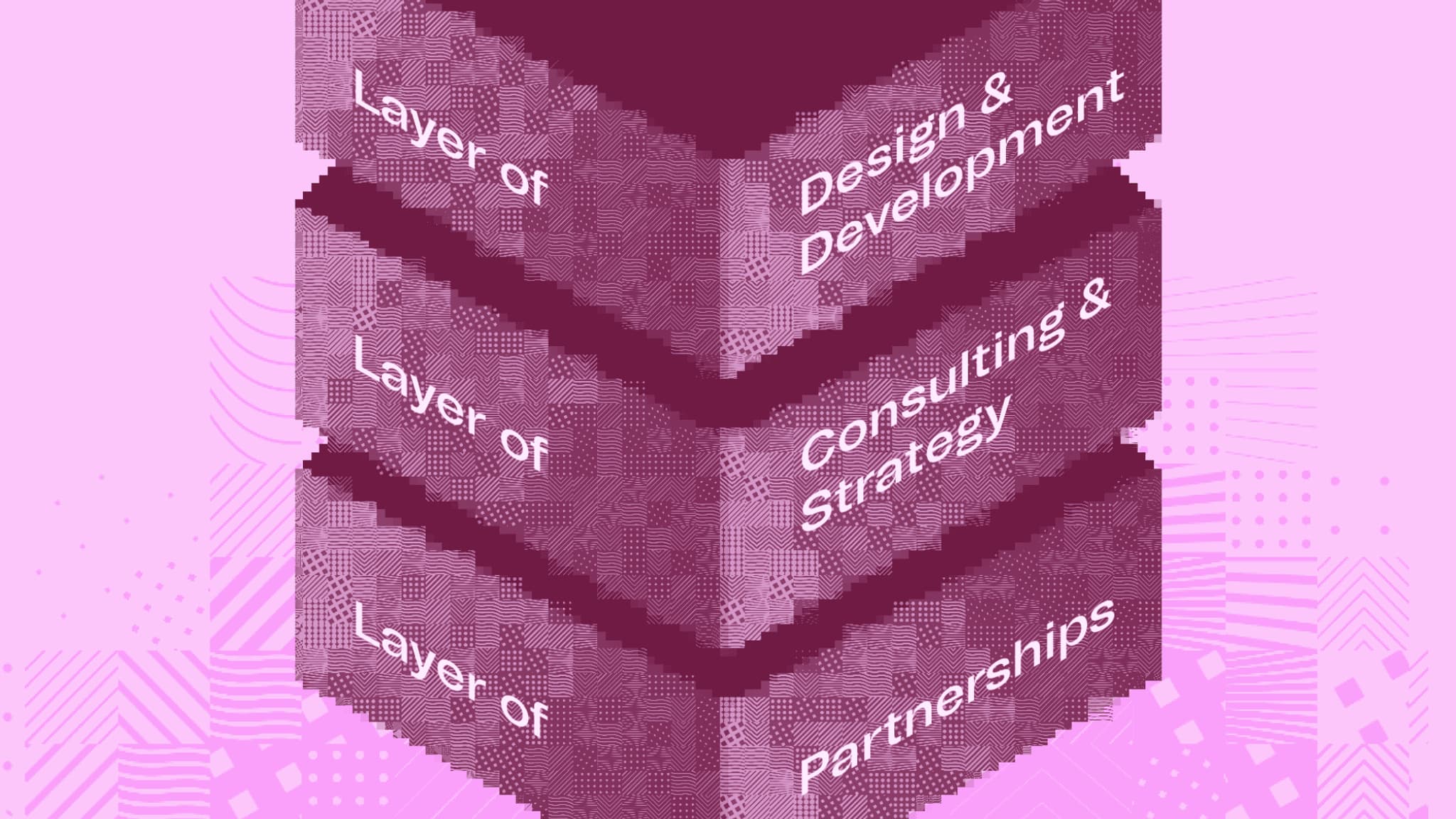
Three Layers of Partnership at CDA
Layer of partnerships
For every project, CDA begins with a simple yet fundamental question: "What is the real problem you’re facing?" We don’t just come in to design a logo or build a website. Instead, we put ourselves in the client’s shoes, treating them as strategic partners to uncover and solve their deepest challenges.
In this first stage, our focus is on building trust. When clients come to CDA, they bring more than just requests, they bring their stories, goals, and challenges. From these shared insights, we form a co-creative relationship with our clients, where both parties face real challenges together and discover long-term strategic solutions.
Layer of consulting & strategy
Once trust is established, CDA transitions into the role of a strategic consultant. Unlike many agencies that compete in pitching contests to get projects, CDA takes a different approach. We don’t start with hastily prepared proposals; instead, we spend time working closely with the client to shape the strategy from the ground up.
At this stage, our focus is on defining the brand’s direction, uncovering its core values, and setting clear goals for the project. This is not merely about solving a design problem; it’s a collaborative journey, a strategic mindset shared between CDA and the client, ensuring that every solution is aligned with the client’s long-term objectives most effectively.
Layer of design & development
We move into the design and development phase only when the strategy is clearly defined. Every design CDA creates isn’t just about meeting aesthetic standards, it’s deeply tied to the strategy, ensuring the brand’s message is communicated effectively. From the initial ideas to the final product, we focus on delivering solutions that are visually appealing and aligned with long-term goals, helping the client’s brand build sustainable value in a competitive market.
6. Why strategic partnerships drive greater value for clients
Fresh perspectives and strategic innovation
One of CDA’s greatest strengths is its ability to bring fresh perspectives. Clients are often so close to their products, history, and brand mission that they can become too focused on internal viewpoints. Agencies specialize in stepping into the consumer’s shoes and uncovering unique insights.
Effective and unified communication
In a partnership, CDA doesn’t just "work for" the client but "works with" them, becoming deeply involved in every stage of the process. This helps CDA gain a deeper understanding of the client’s goals, mission, and unique attributes.
Optimal results that exceed expectations
CDA doesn’t just execute based on the initial brief but actively adjusts throughout the project, responding to real-world changes and client feedback. Not only are the original expectations met, but the outcomes often exceed them, delivering long-lasting solutions that lay a strong foundation for sustainable growth.
7. Why partnership is core to CDA’s growth strategy
Collaboration with every client is more than just a one-time project, it’s an opportunity for CDA to grow, improve, and expand its vision. Every project is treated as a unique journey where both sides learn and develop together.
Sustainable growth
Beyond numbers and contracts, trust from clients is the foundation of CDA’s sustainable growth model. Each successful project not only contributes to financial stability but also opens doors to new collaborations and fosters deeper, more meaningful partnerships.
Deeper industry and market Insights
Every client brings a unique story, and every industry offers a new world to explore. Working closely with clients means that CDA doesn’t stop at meeting requirements - it dives deeper into understanding the specific market context. This interaction expands CDA’s knowledge and allows for the creation of tailored, innovative solutions for each industry.
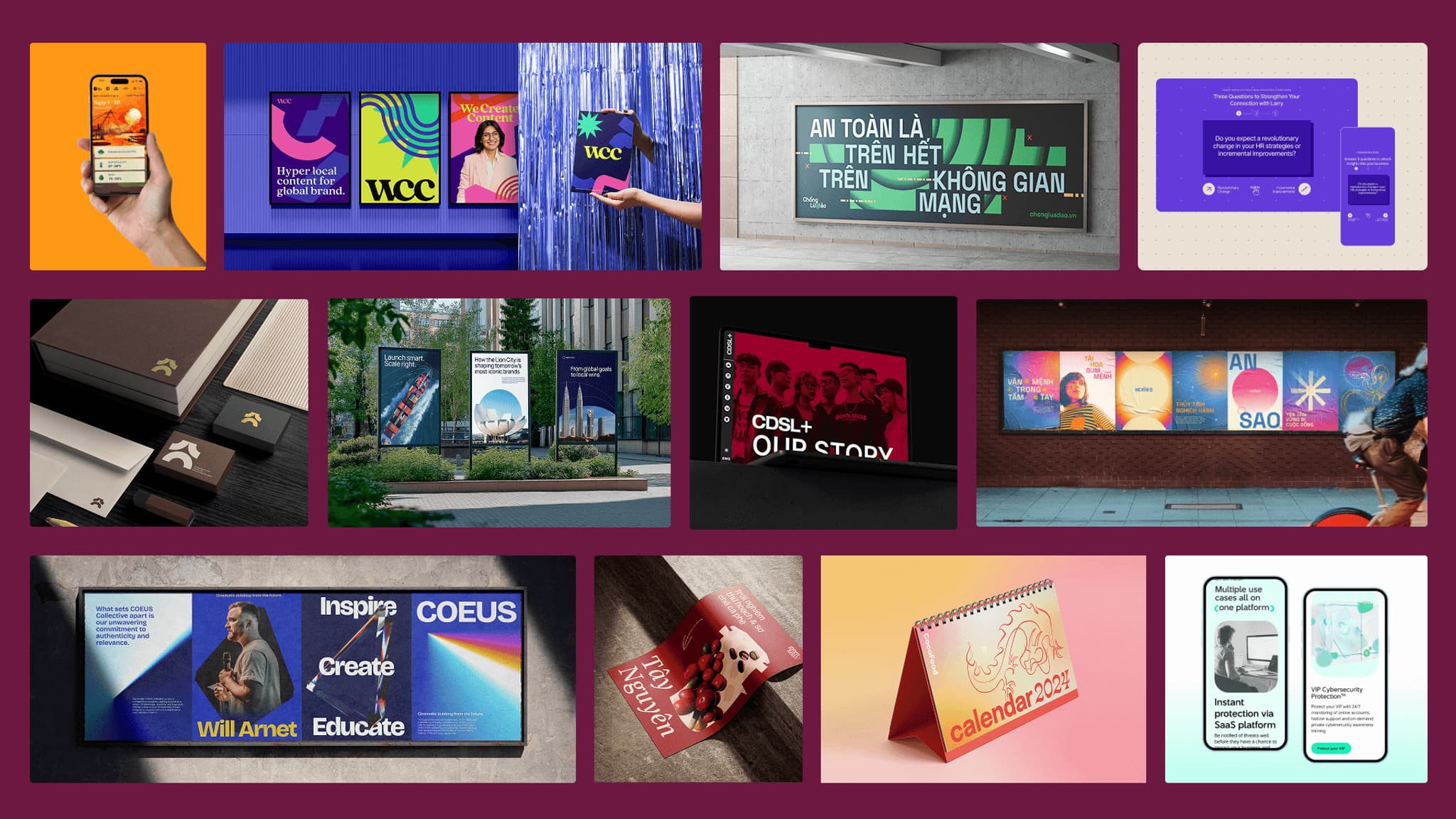
Real-life applications of branding projects developed by CDA.
Continuous improvement
Every partnership provides valuable lessons for CDA. Whether it’s a major success or an unexpected challenge, these experiences offer opportunities to reevaluate processes, experiment with new methods, and hone creative skills.
8. Wrap-up
A successful partnership isn’t just about what we achieve but how we achieve it together. A lasting client-agency relationship is built on trust, understanding, and the ability to turn ideas into meaningful outcomes. When clients and agencies are willing to truly collaborate, not just as partners but as teammates, the possibilities are endless.