A brand story is not a script
Summary
Brand storytelling is not the exercise of inventing a compelling narrative. It is the work of making a clear promise, proving it through decisions and behavior, and giving people a reason to recognize themselves in the business. CDA explains how to build a story that can survive beyond a campaign.
The story is bigger than the words
Most brand stories are written as if the right narrative can solve a problem that is actually structural. The business may be unclear about its value, inconsistent in how it behaves, or unable to explain the choice it is asking people to make.
This article takes a different view. A story is not a script placed on top of the business. It is a pattern of promise and proof that helps people understand what the business stands for and what it makes possible.
Start with the promise, not the plot
A brand story is not the account of how a company began. It is the meaning a business makes available through what it promises, what it does, and what people experience when they meet it.
That distinction matters because a polished origin story can still sit on top of a confusing product, a careless service, or a promise the organization cannot keep. Narrative may attract attention, but only behavior gives it weight.
At CDA, we treat storytelling as a design problem. The task is to find the idea the business can make credible, then build the conditions that let people recognize it.
A story becomes believable through repetition
People do not encounter a brand in one carefully written paragraph. They encounter a sequence of signals: a recommendation, a website, a sales conversation, a price, a delivery, a product, and the way a company responds when something goes wrong.
Each signal either supports the promise or asks the audience to explain a contradiction. Over time, those signals form a pattern. That pattern is the brand story in practice, whether the company has named it or not.
The strongest stories therefore connect language to systems. The message, identity, offer, service, and internal choices should point in a compatible direction. Consistency is not repetition for its own sake. It is how meaning becomes dependable.
Difference is useful only when it means something
Most categories are crowded with similar claims. Faster, easier, smarter, more sustainable, more human. A business can list its differences and still leave people with no reason to care.
Functional difference matters when it changes the customer’s situation. But when products and services begin to resemble one another, people also look for a point of view. They want to understand what the business notices, what it values, and what kind of relationship it is willing to build.
Story gives difference a frame. It turns a feature into an implication and a product into a choice with meaning. That frame should clarify the offer, not decorate an ordinary one.

Customers read the business behind the message
A promise is interpreted through the whole experience around it. A brand that speaks about care but makes support difficult tells a different story. A brand that claims expertise but hides its reasoning asks the audience to take its word on trust.
This does not mean every touchpoint must sound identical. A sales conversation, product interface, social post, and customer-support response have different jobs. They should share a direction while adapting to the moment.
Before writing a story, look for the operational choices that make it true. How are decisions made? What does the business refuse? Where does it spend attention? Those answers are often more revealing than a list of values.
A strong story changes how value is understood
Brand storytelling is sometimes sold as a way to justify a higher price. That reverses the relationship. A story cannot make weak value meaningful for long. It can help people understand the value that is already being created, and why it matters to them.
Price becomes part of the story because it signals a choice. It may communicate care, scarcity, access, investment, or a different standard of service. None of those meanings is automatic. The surrounding experience has to earn the interpretation.
When the promise and the experience agree, people can make a more informed choice. The outcome is not simply a premium position. It is less ambiguity about what the business is offering and why it has chosen to offer it that way.

Phê La makes provenance part of the product
Phê La is a useful illustration of the difference between describing a product and giving it meaning. Tea remains the product, but the surrounding story can make land, craft, Vietnamese agriculture, and local identity part of how the product is understood.
That meaning is valuable only when it appears in more than a claim. It needs to be carried by the ingredients, the language, the visual world, the spaces, the service, and the decisions about what the brand will not imitate.
The lesson is not to copy Phê La’s story. It is to notice the mechanism: a business becomes more distinctive when its context is made visible and connected to a real choice the audience can appreciate.
A story is useful when it changes a decision
Brand storytelling does not replace marketing, advertising, or product strategy. It gives those activities a clearer logic. Without a shared point of view, every campaign has to rebuild the case for the business from the beginning.
A useful story helps people decide what to notice, what to remember, and what to do next. It can guide a headline, a service decision, a sales explanation, a hiring message, or the order of information on a digital product.
That is why brand value is often cumulative rather than immediate. A story becomes an asset when it reduces the effort required to understand the business and makes future choices more coherent.
Storytelling uses more than words
Storytelling is not a single format. The medium should follow the kind of understanding the audience needs.
- Verbal storytelling gives language to the promise, tension, and point of view.
- Visual storytelling makes a position tangible through image, form, motion, and atmosphere.
- Data storytelling turns information into a pattern that helps people see their own behavior or a wider change.
- Experiential storytelling lets people understand the idea by moving through the product, service, or environment.
The common thread is not emotional intensity. It is a deliberate relationship between what is shown and what the audience is being helped to understand.
Data can make an audience part of the story
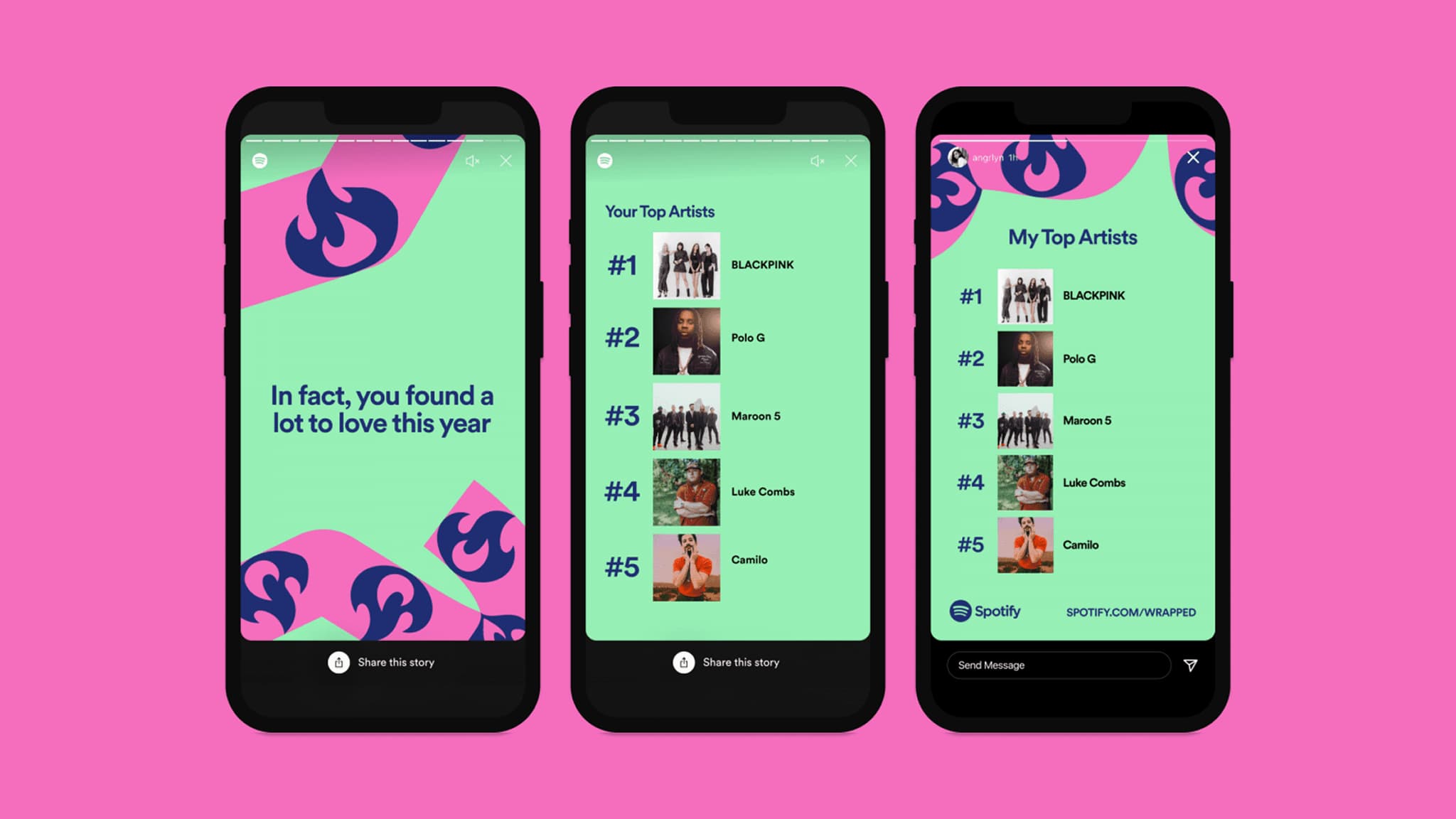
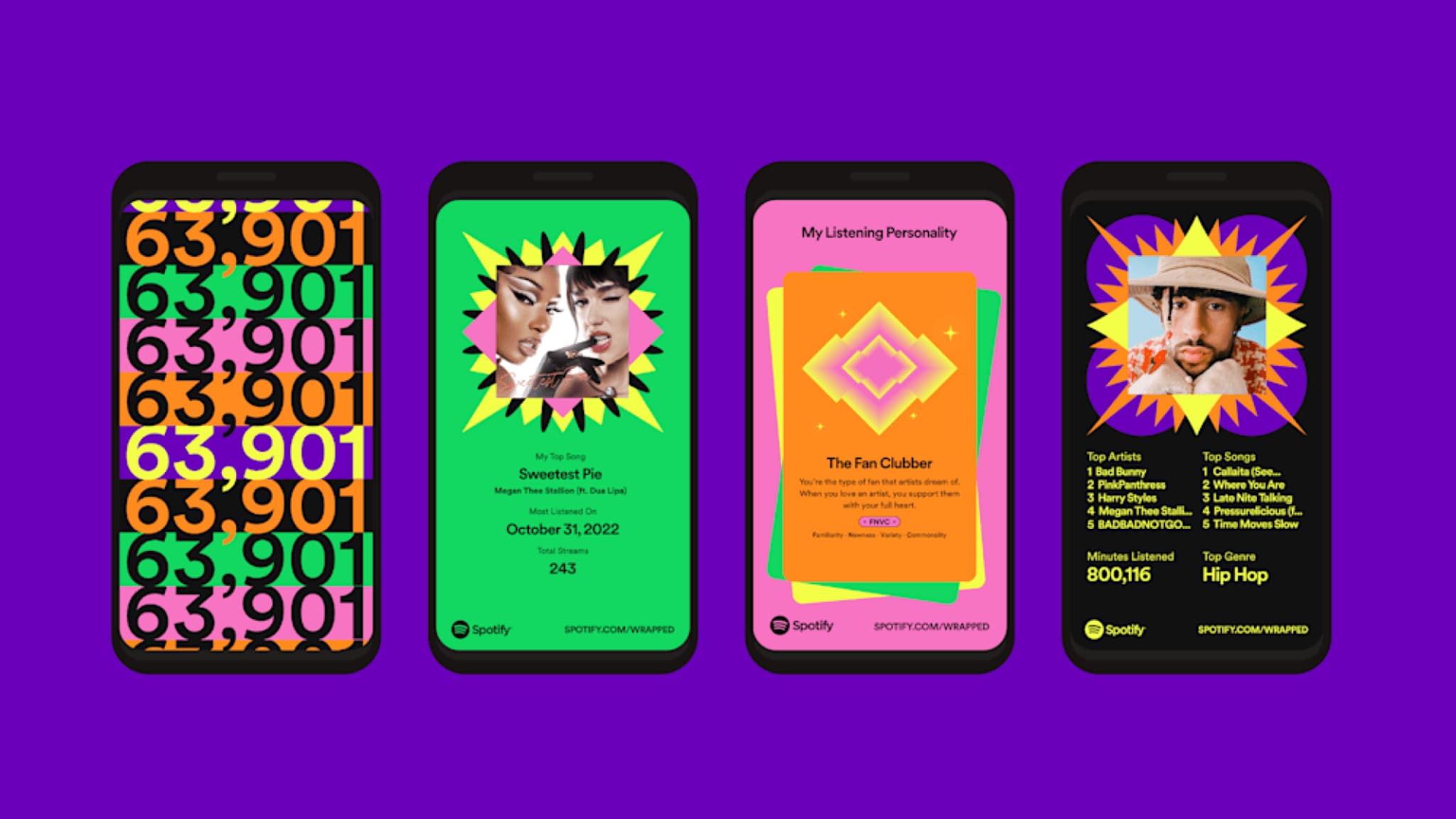
Spotify Wrapped works because it does more than report listening data. It turns a year of private behavior into a recognizable portrait, then gives people a way to share that portrait with others.
The experience is personal without pretending that a user is only a set of numbers. The data becomes a narrative device: it helps people notice a pattern in themselves and gives them language for a relationship they already have with music.
For other businesses, the useful question is not whether they can imitate Wrapped. It is whether their own information can help people understand a choice, a progression, or a shared world. Data becomes meaningful when it returns insight to the people who created it.
Visual storytelling makes a point of view visible
Images can carry an argument before a sentence is read. They establish who is included, what is considered beautiful or valuable, and which version of the future feels possible.
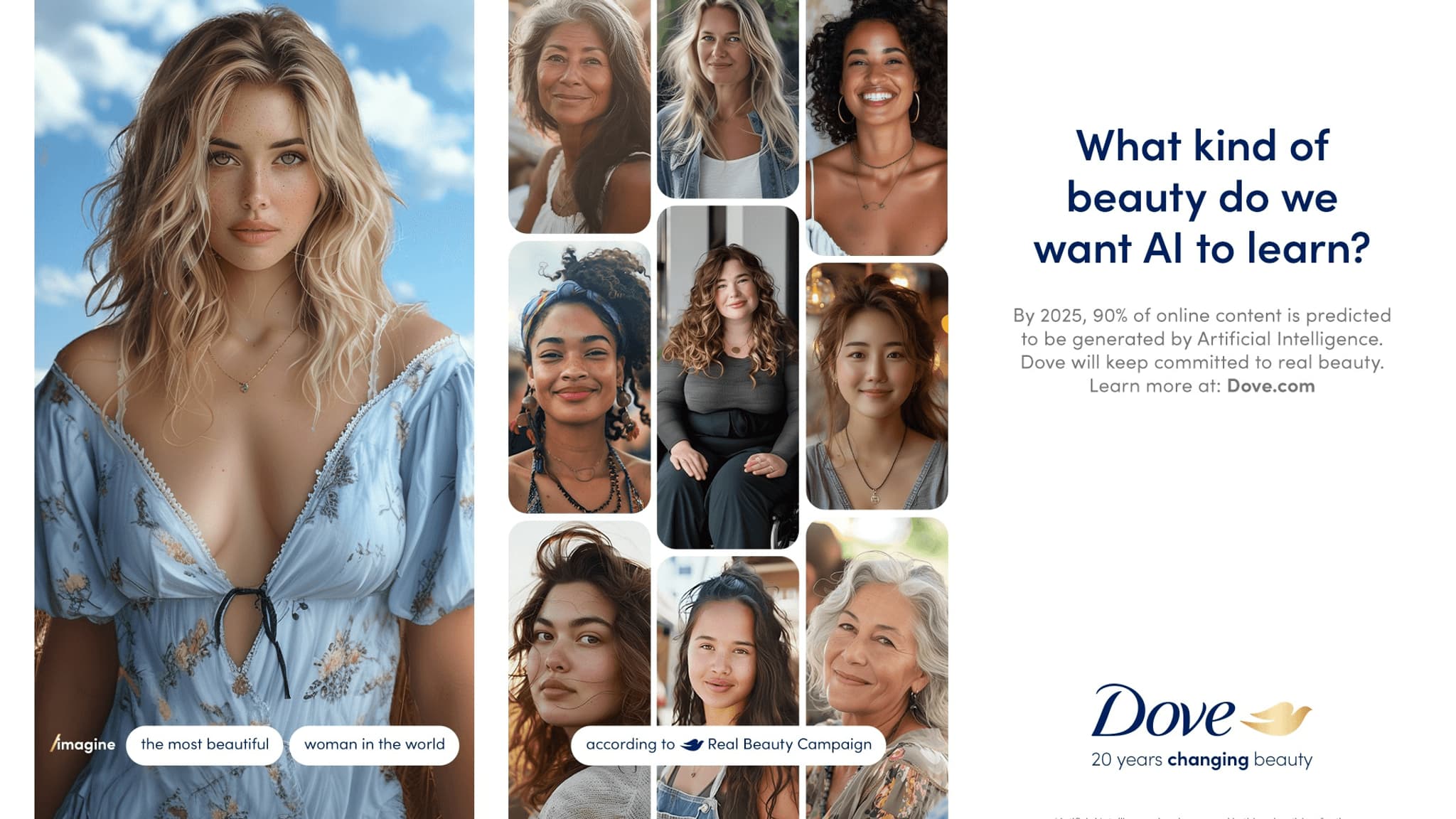
Dove’s film “The Code,” referenced in the earlier version of this article, uses AI-generated beauty imagery to expose how narrow defaults can reproduce narrow standards. The visual device works because it is attached to a position about representation, not used as decoration around a generic message.
Visual storytelling becomes persuasive when the form makes the idea easier to experience. The image should not merely create mood. It should help the audience see the consequence of the belief the brand is expressing.
Four questions keep a brand story honest
A credible story does not need to be grand. It needs to survive a few direct questions. Before turning a point of view into a campaign or identity, ask what tension it names, what evidence supports it, whose situation it serves, and what it should make possible.
The Spotify example that follows is useful because its narrative is grounded in actual behavior. The principle can apply to a founder-led business, a public institution, or a product team, but the evidence will look different in each case.
Name the tension the brand helps people navigate
Every useful story has a tension beneath it. People want convenience but do not want to feel careless. They want expert help but do not want to surrender judgment. They want progress but do not want to lose what matters.
Find the tension before choosing the plot. A story that starts with “we have always believed” often becomes self-description. A story that starts with a real conflict can explain why the business exists and what it is trying to change.
The tension should be specific enough to guide decisions. If it could describe every company in the category, it is not yet doing enough work.
Show where the business already keeps the promise
Authenticity is not a tone of voice. It is the relationship between what a brand says and what the organization is prepared to do repeatedly.
Look for evidence in the business before inventing language for it. Which customer problem receives unusual care? Which constraint has shaped the product? Which decision has been made even when it was inconvenient? These details give a story texture and limits.
If the evidence is missing, the answer is not a more persuasive script. It is a decision about what the business must change before the promise can be made in public.
Choose the people whose situation shapes the story
A story written for everyone usually gives nobody a clear place inside it. Different audiences can share a belief, but they do not arrive with the same needs, language, or ability to act.
Define the people whose situation the brand is designed to improve. What do they already know? What are they trying to protect? What would make the choice easier or more meaningful for them?
This is not permission to stereotype an audience. It is a way to respect context. Specificity makes the story more useful because it gives the business a real person to design for.
Decide what the story should make possible
Emotion is not the final measure of a story. A person may feel moved and still have no idea what the brand enables or what to do next.
Define the consequence at the level of behavior:
- understand an unfamiliar offer;
- choose with more confidence;
- try a product or service;
- join a community or conversation;
- support a decision inside the organization.
The intended action should shape the story’s form, channel, and level of detail. A brand story is complete when it helps a person move, not when it has produced a memorable sentence.
Turn the story into choices people can repeat
Once the point of view is clear, translate it into decisions the organization can use. A practical working session can ask:
- What promise are we making?
- What behavior would prove it?
- Which audience needs to recognize it first?
- Where will the story be tested under real pressure?
- What will we stop saying or doing because it conflicts with the promise?
The last question is important. A story becomes a system when it helps people remove choices as well as make them. Boundaries protect meaning when the business grows, changes channels, or brings new people into the work.
Chống Lừa Đảo made safety tangible
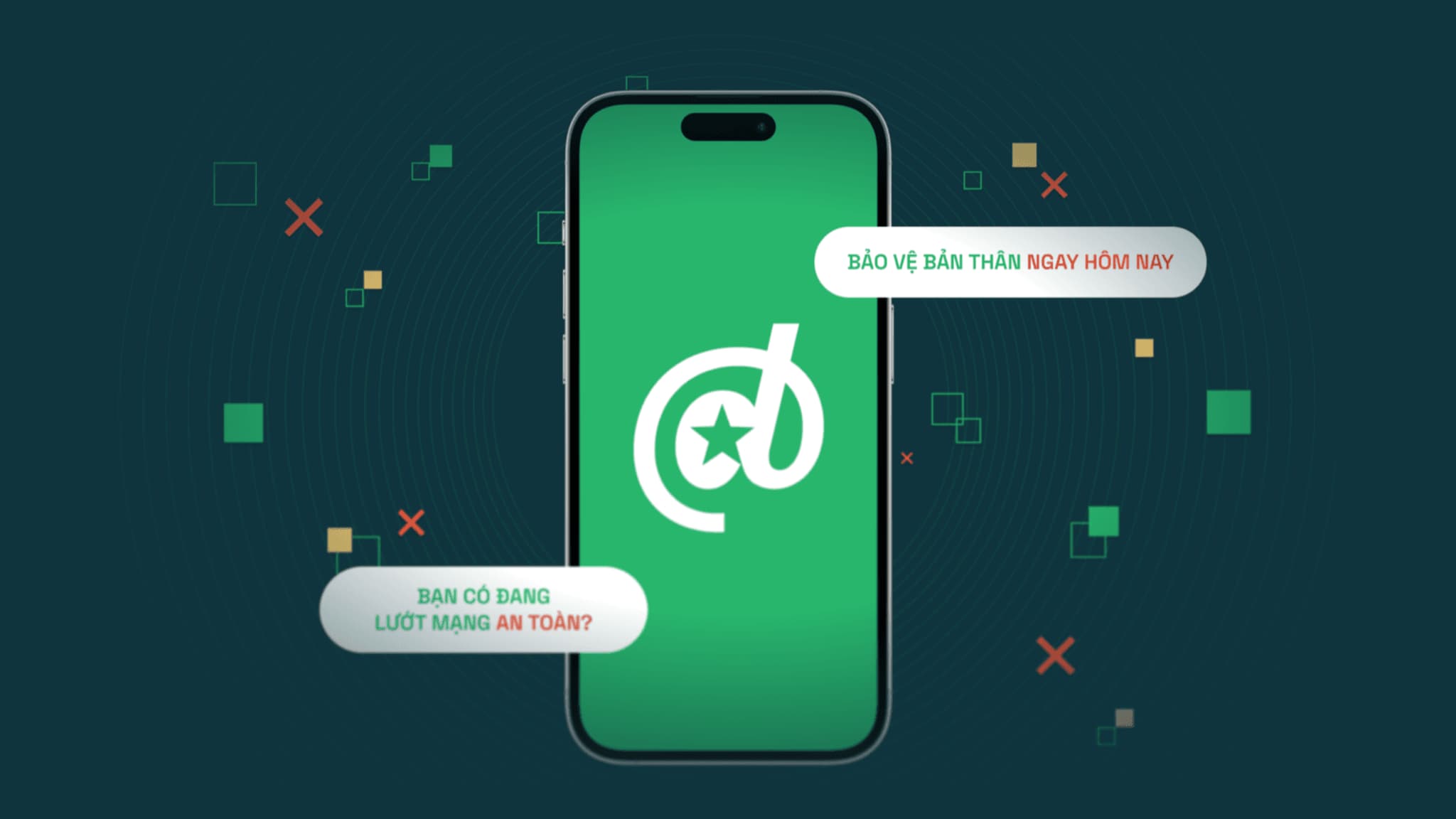
CDA’s work with Chống Lừa Đảo shows how a story can move from an abstract value into a usable identity. The project addressed a difficult subject: online scams and malicious content, where fear can easily become the dominant tone.
The opportunity was to make cybersecurity feel trustworthy and close at hand. “Safety at Your Fingertips” gives the idea a human scale. It frames protection as something people can understand and use, not as a distant technical promise.
The value of the story came from the decisions around it. The identity had to feel credible enough for a serious issue and approachable enough for everyday use.

The identity carried the story into the system
The Chống Lừa Đảo identity connects technological cues with a distinctly Vietnamese sense of protection. A stylized star surrounding the letter “a” carries a reference to the Vietnamese flag while also suggesting a protective gesture.
That detail matters because it gives the audience something to recognize, but it is not the whole story. The same idea has to extend into the digital experience, the hierarchy of information, the language, and the moments when a user needs reassurance.
A brand story earns its place when it helps make those choices. The narrative is not added after the design. It is one of the reasons the design takes the shape it does.
CDA treats storytelling as a shared design problem
We do not begin by asking what impressive story a business could tell. We ask what it is trying to make possible, what people need to believe, and which parts of the organization must support that belief.
That is why our work moves between strategy, language, identity, digital experience, and behavior. A story is stronger when the people who carry it can understand the reasoning behind it and adapt it without losing its meaning.
Our approach to branding treats storytelling as part of the system, not as a performance placed on top of it. The work is collaborative because credibility cannot be designed by one side alone.
The story is the pattern people can trust
Brand storytelling is not about making a business sound more interesting than it is. It is about making the business’s meaning easier to recognize, then giving the organization the discipline to keep proving it.
Start with a promise that matters. Find the tension beneath it. Show the evidence. Design the choices, experiences, and behaviors that allow other people to feel the promise for themselves.
The best brand story is not the one people remember because it was beautifully written. It is the one they recognize because the business keeps making it true.