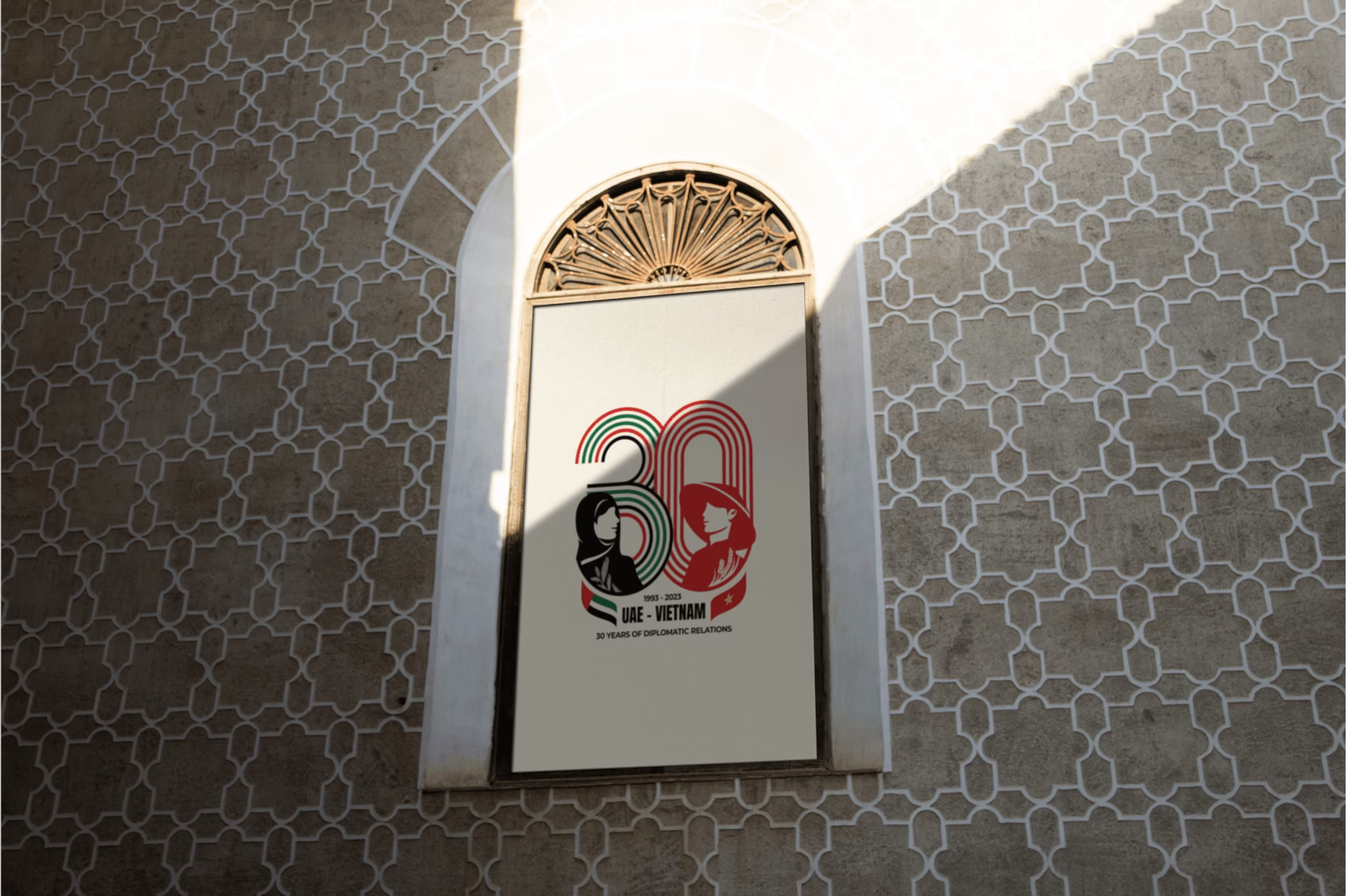
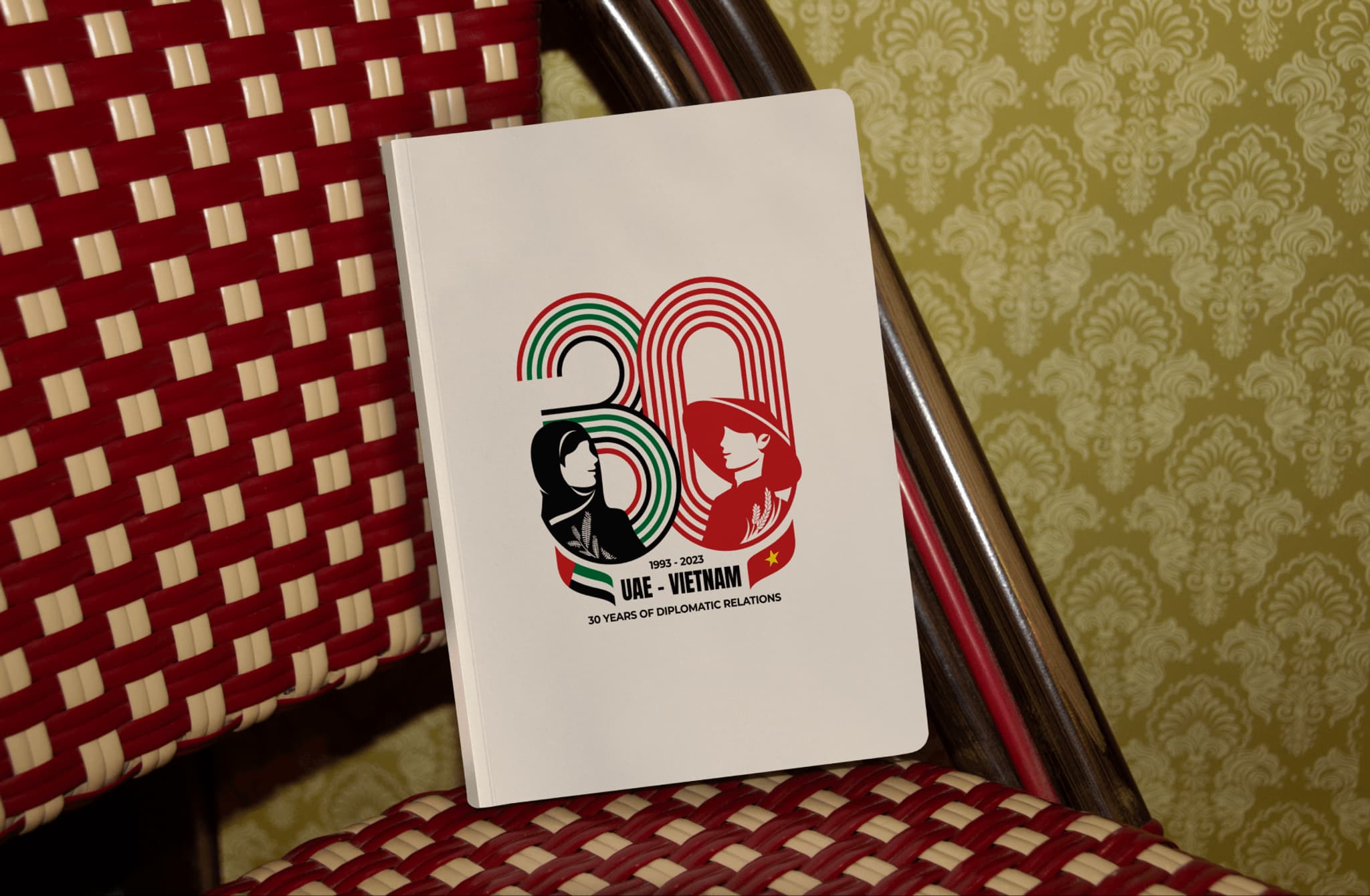
A diplomatic identity does not live only on an invitation or stage backdrop. It moves through official communications, print, signage, digital channels, commemorative objects, and images that may outlast the event. A concept that works in one presentation can fail when it is reduced, reproduced, translated, or placed beside other institutions.
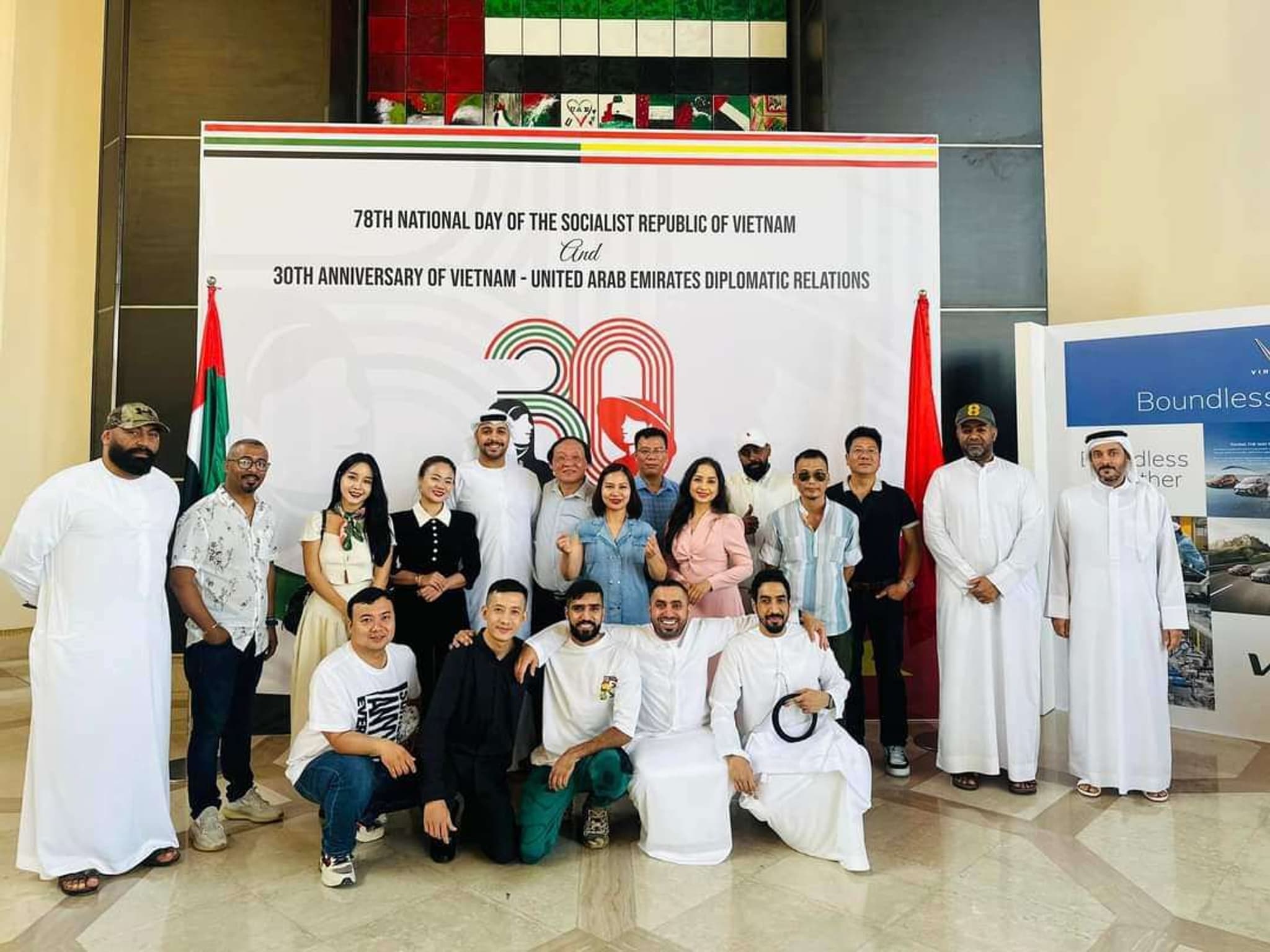
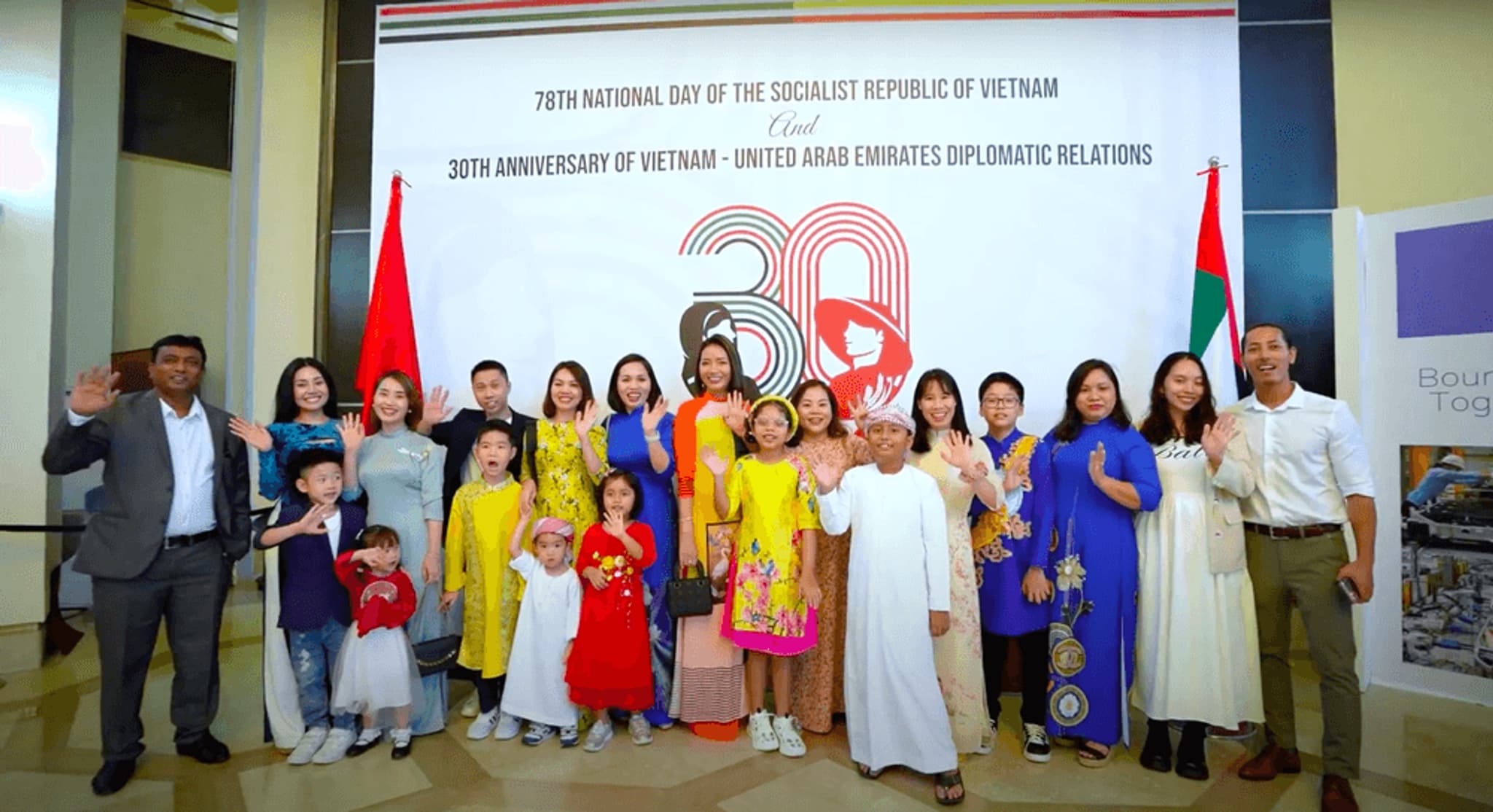
The mark was unveiled as part of Vietnam’s National Day celebration in Abu Dhabi, where it appeared across venue decoration, publications, and media. That range matters because a public identity is never seen in isolation. It has to share space with flags, institutional names, event information, and the practical demands of the channel.
We test the mark against those conditions early. Can it be understood at a distance? Does it hold its shape in a small digital space? Does it work in one color? Can it sit beside both national identities without competing with them? Can a partner use it without the original designer supervising every application?
For this project, clarity was not a compromise to symbolism. It was how the symbolism became usable. The forms needed to remain legible, the composition needed to survive different scales, and the identity needed to operate across ceremonial and everyday communication. A public symbol earns trust partly through what it refuses to make difficult.
When we approach a symbol with public or diplomatic meaning, five questions guide the work:
- What relationship is being made visible? Define the human and institutional meaning before choosing motifs.
- Which references deserve to be present? Choose specific cultural signals that can carry meaning, not a checklist of decoration.
- How should the references meet? Use composition, proportion, rhythm, and space to express the relationship between them.
- Where will the symbol have to work? Test real scales, materials, channels, and neighboring marks before the final presentation.
- How will other people carry it forward? Equip partners with a system that protects the essentials while leaving room for context.
The ceremony in Abu Dhabi gave the identity a public moment. Its longer life is in the memories and associations it helps organize. An anniversary is temporary. A well-made symbol can become a reference point for the relationship it commemorates.
That is the core of CDA’s approach. We do not begin by asking how to make a logo look official. We ask what the identity must help people understand, what it must respect, and where it must work. Then we build a visual system that can carry those decisions with enough clarity to travel.
The final measure is not whether every viewer can recite the design rationale. It is whether the symbol creates recognition without erasing difference, and whether it makes the relationship feel present rather than merely historical.