CDA’s process is a shared way of making decisions

Summary
CDA’s process turns brand work into shared decisions. We start with the problem beneath the request, connect strategy to systems and behavior, test the work in real conditions, and leave the organization with the capability to carry it forward.
A process should make shared judgment possible
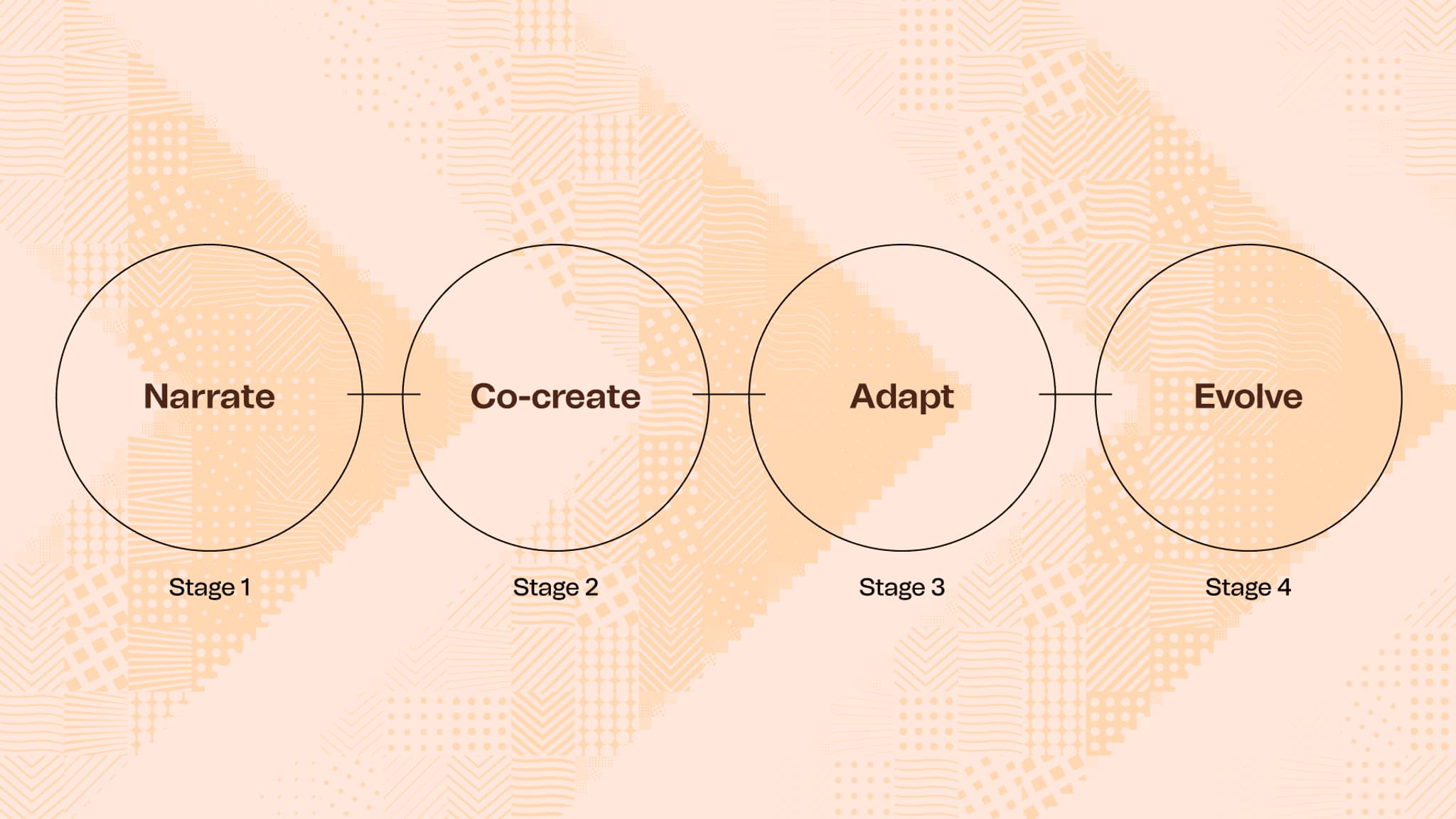
CDA’s process is not a fixed pipeline from brief to deliverable. It is a way of making the problem clearer, building a point of view, testing how it works in the real world, and involving the people who will carry the result.
This article explains the principles behind our collaborative flow and what each stage is designed to make possible.
CDA’s process is a shared way of making decisions
A process is not valuable because it has a familiar number of stages. It is valuable because it helps people understand a problem, make choices, and carry those choices into the world.
At CDA, we shape the process around the conditions of the engagement. A brand identity, a digital experience, and a strategic question need different kinds of attention. The underlying discipline stays consistent: make the problem clearer, connect stories to systems, and build with the people who will carry the result.
The process is not a pipeline the client passes through. It is a structure for shared judgment.

Begin with the problem beneath the request
Projects often arrive as a request for an output. A new identity. A new website. A campaign. Those outputs may be necessary, but they do not explain what needs to change.
We start by asking what is happening around the request. Who is affected? What decision has become difficult? What does the organization need to make possible? What has already been tried, and what did it reveal?
The first phase earns its value by narrowing the problem without closing the solution too early.
Build a shared language for the work
People bring different knowledge to a brand project. Leaders see ambition and risk. Teams see operations and constraints. Customers experience the gaps between the promise and the system.
We make those perspectives visible and look for the language that can hold them together. This is not about forcing agreement. It is about giving the team a common way to describe the tension, the audience, the opportunity, and the trade-off.
Shared language makes later disagreement more useful because people know what the work is trying to protect.
Strategy turns complexity into direction
Strategy is not a deck that sits beside the creative work. It is a set of decisions about what matters, for whom, and why. It should help the team choose what to emphasize, what to remove, and what the organization must prove.
Our strategic work connects the human story to the system around it. A clear point of view should change how a brand speaks, behaves, organizes information, and makes choices. Strategy becomes useful when people can use it without asking for a new interpretation each time.

Collaboration is a working method, not a workshop mood
Co-creation is sometimes treated as a room full of sticky notes. The real work is more demanding. It asks people to share knowledge, question assumptions, and accept that the best answer may not belong to one person.
We design collaboration around a useful question and a clear decision. The right people contribute at the right point. The conversation produces evidence, direction, or a next action. When participation does not change the work, it becomes ceremony.
Make the future system visible before it is finished
A brand idea becomes stronger when people can see how it might live. We move between concept and application to test whether the point of view survives contact with real situations.
That may mean exploring language, identity, hierarchy, interaction, or the relationship between a digital product and the organization behind it. The purpose is not to decorate a strategy. It is to expose where the strategy is clear and where it still needs a decision.
Design for the people who will carry the work
The final system has to work for more than the project team. It may be used by marketers, salespeople, product teams, service teams, partners, and future employees who were not present when the decisions were made.
Design the principles, tools, examples, and boundaries they need. A system should create enough consistency for recognition and enough flexibility for responsible adaptation.
Our [approach to branding](/capabilities/branding) treats usability as part of the creative quality. A beautiful system that nobody can carry is incomplete.
Test the decisions the work is meant to change
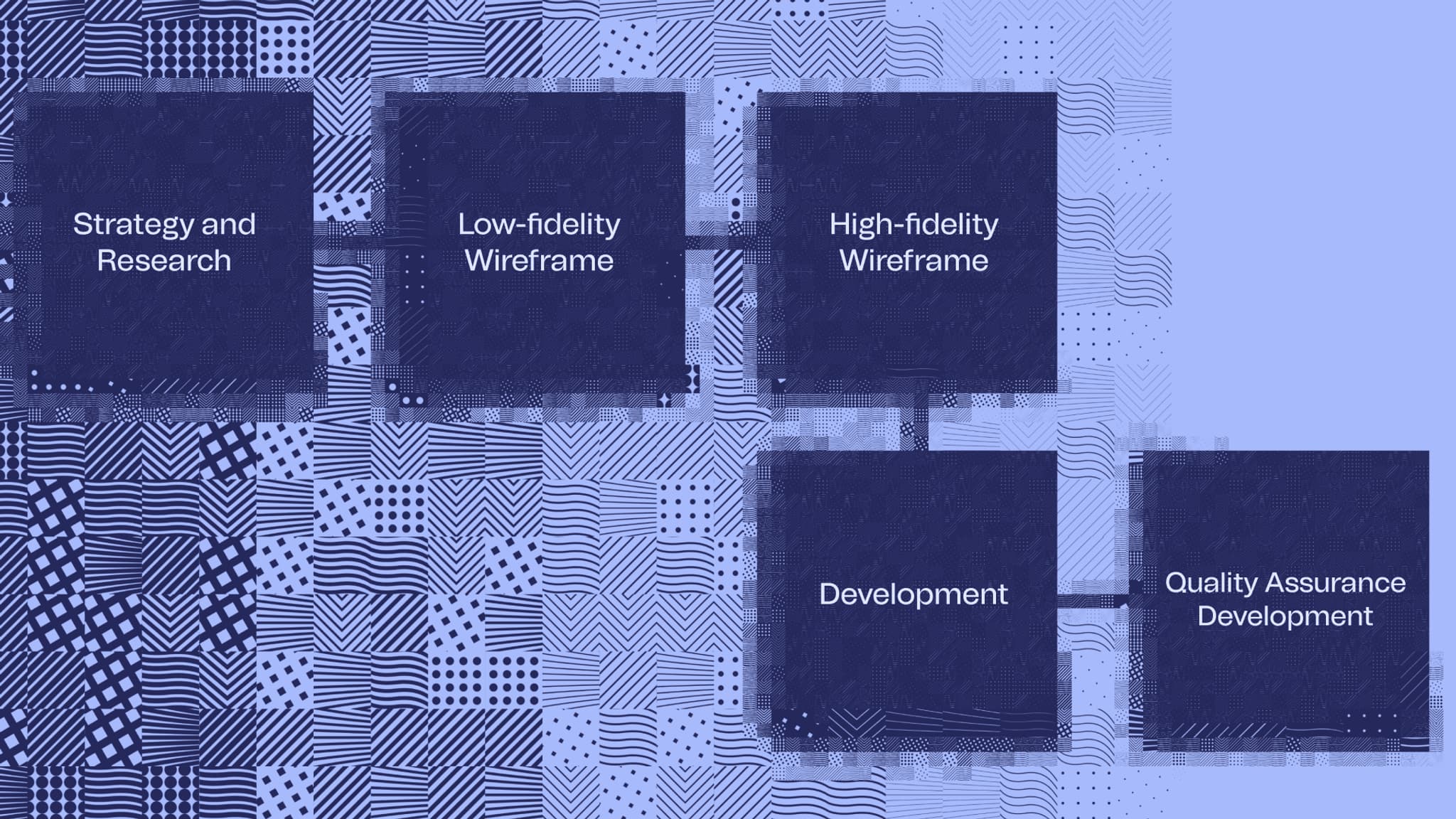
Testing is not reserved for the end. As the work develops, ask whether the direction helps people understand the offer, choose with more confidence, or act in a way the organization can support.
Review the system in the conditions that matter: small screens, real content, internal conversations, handoffs, competing messages, and moments of uncertainty. A concept should become more specific through use, not only more polished through presentation.
Make trade-offs visible while there is still time to decide
Every project has limits. Time, budget, capability, technical conditions, governance, and organizational attention all shape the answer. Hiding those limits does not create freedom. It delays the moment when the work has to become useful.
We make trade-offs part of the conversation. What must be protected? What can be simplified? What needs more evidence? Which ambition should wait until the organization can carry it?
The client and agency carry different responsibilities
The agency owns the quality of its thinking, craft, and process. The client owns the context, authority, and organizational decisions only it can make. Both sides own the honesty of the relationship.
That division is not a boundary against collaboration. It is what makes collaboration possible. We can challenge a brief without pretending to know the organization better than the people inside it. The client can bring us into difficult decisions without expecting us to perform certainty where the evidence is incomplete.

Leave the organization more capable
A project should not create dependency as a measure of success. The client should understand the decisions, know how to use the system, and have a practical way to maintain it as conditions change.
Capability transfer starts in the process. Explain the reasoning. Invite the people who will carry the work. Build tools that fit the organization’s actual capacity. Make the next decision easier, not just the final handover more impressive.
A process should learn as the work develops
No brief survives contact with reality unchanged. Research reveals a new tension. A stakeholder names a constraint. A prototype shows that an idea works in one context but not another.
A good process makes those discoveries useful. Change the framing openly, protect the central decision, and resist the temptation to hide learning because it makes the route look less linear. The process is there to improve the work, not to create a perfect story about how the work happened.
The process ends with a system that can continue
The final presentation is one moment in a longer relationship. What matters next is whether the organization can explain the idea, use the system, and make new choices with greater confidence.
That is the measure of a collaborative process. It does not only produce an answer. It changes the conditions around the answer.