A creative brief is a decision, not a form

Summary
A creative brief is more than paperwork before the real work. It aligns the problem, audience, tension, and limits so creative teams can make better decisions with purpose. CDA explains how to write a brief that focuses creativity without prescribing the answer.
A brief should make the work more focused, not more predictable
A creative brief is a shared decision about what the work must change. It gives a team a common problem, a specific audience, a human tension, and a set of limits without dictating the final idea.
This article challenges the brief as a passive project document and treats it as a living tool for judgment, collaboration, and creative accountability.
A creative brief is a decision, not a form
The creative brief is often treated as paperwork before the real work begins. Someone fills in the boxes, sends the document around, and the team moves on to the part that feels more creative. That habit misses the point.
A creative brief is a shared decision about what the work must change. It gives a team a common problem, a specific audience, a meaningful tension, and a set of limits. It does not remove judgment from the process. It makes judgment possible without asking every person to solve a different problem.
Our view at CDA is that a brief should make the work more focused, not more predictable. A good brief does not tell a designer what the answer looks like. It makes clear what the answer needs to do.
Why creative briefs become paperwork
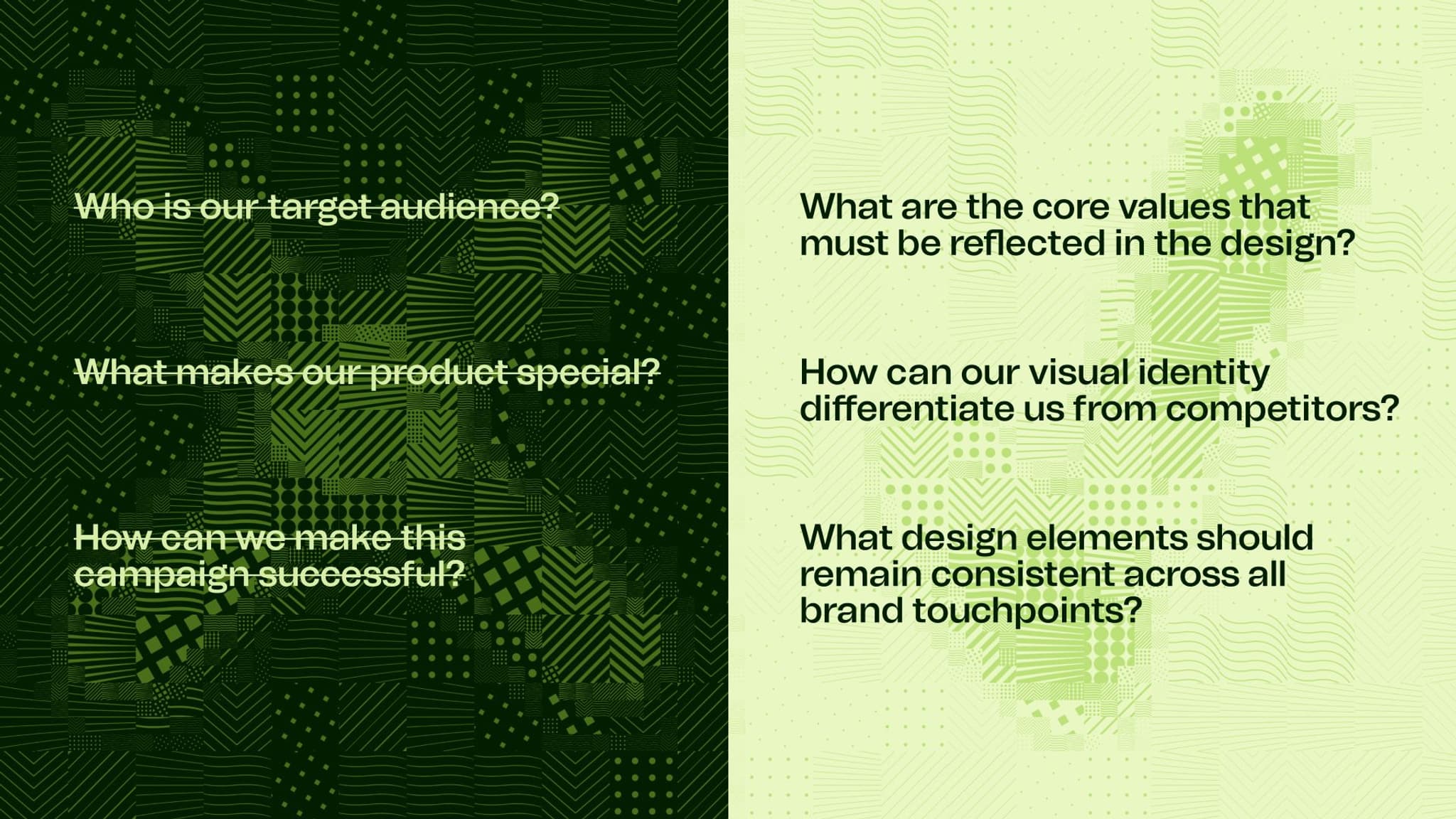
Briefs lose their value when they are written to demonstrate alignment rather than create it. They collect every stakeholder’s preference, repeat the client’s vocabulary, and describe an audience so broadly that nobody can disagree. The document looks comprehensive while the decision remains unresolved.
There are three common symptoms:
- The brief describes a category but never names the specific change the work should make.
- It lists many audiences and messages without choosing who matters first.
- It treats constraints as obstacles instead of using them to make the idea more precise.
A longer document does not repair an unclear brief. The work is not to capture everything known about the project. It is to decide what the team must hold in mind when information, opinions, and possibilities begin to compete.
Start with the change, not the deliverable
“We need a campaign,” “we need a new identity,” and “we need a website” are deliverables. They may be necessary, but they are not the reason the work exists.
Begin with the change. What should people understand, feel, do, or stop doing after the work reaches them? What does the organization need to become capable of? What decision is currently difficult because the story, system, or experience is unclear?
For example, a brand project may not really be about making the company look more modern. It may be about helping a growing organization make a coherent promise across teams that have been speaking in different ways. A digital project may not be about adding pages. It may be about reducing uncertainty at a crucial decision point.
When the change is explicit, creative ambition has somewhere to land.

A useful brief turns the problem into a shape
Creative teams need a problem they can work on. “Increase awareness” is too abstract. “Make the brand feel premium” is too subjective. A workable problem describes the gap between the current condition and the desired one.
Write the problem as a tension:
- People want to choose with confidence, but the category gives them too much noise.
- The company has stronger capability than its reputation communicates.
- The offer is valuable, but its language makes it sound interchangeable.
- The organization needs to grow, but the current experience depends on informal knowledge.
A tension gives the team something to interpret. It also creates a useful limit. If an idea does not help address the tension, it may be attractive but irrelevant.
Choose the audience whose decision matters
Most briefs say the work is for everyone. That is usually a way of avoiding a difficult choice. A broad brand may serve many people, but a specific piece of work still has a primary decision to influence.
Name the person or group whose decision matters first, then describe the situation around that decision. What do they already believe? What do they fear losing? What language do they trust? What are they comparing? What power do they have to act?
Audience definition is not demographic decoration. It is a way of understanding the conditions under which meaning will be received. The same promise can feel generous to one person and presumptuous to another. The same interface can feel simple to an expert and opaque to someone entering the category.
Find the human tension beneath the business goal
Business goals and human needs are not opposites, but they are not interchangeable. “Drive conversion” describes a commercial outcome. It does not explain why a person would choose, hesitate, or leave.
Look for the human condition inside the goal. Perhaps a team needs to feel confident recommending the service. Perhaps a customer needs to feel safe enough to try something unfamiliar. Perhaps a founder needs the organization to be understood without reducing its complexity.
This is where strategy and creativity meet. The human tension gives the work emotional relevance. The business goal gives it consequence. A brief should hold both so the idea is neither a beautiful gesture nor an efficient answer to the wrong problem.
Give the idea room, then give it a boundary
A brief should be specific about the problem and open about the solution. It can name the territory the idea should explore without prescribing the visual device, tagline, format, or execution.
Useful boundaries include:
- the belief the work must make credible;
- the feeling or action the audience should carry forward;
- the behavior or category convention the idea may need to challenge;
- the non-negotiable truths, legal conditions, or accessibility needs;
- the places where the idea must work, from a conversation to a screen or service moment.
Constraints are not the enemy of creativity. They create pressure in the right places. A team with no boundaries spends energy exploring possibilities that can never survive the system around them.
Define success as evidence, not applause
Creative work can feel successful because it receives enthusiasm in a room. That response matters, but it is not enough. A brief should state what evidence will show that the work has addressed the problem.
Some evidence is behavioral: a clearer choice, a completed action, a better conversation, fewer avoidable questions. Some is organizational: teams use the same story, sales can explain the value, a service can deliver the promise without special handling. Some is perceptual: people understand the brand differently or recognize a meaningful distinction.
Do not pretend every outcome can be isolated or measured perfectly. Instead, agree on the signals that will help the team learn. Success criteria are not a way to make creative work mechanical. They are a way to keep taste from becoming the only form of evaluation.
Every strong brief makes a trade-off
A brief that asks for everything asks for nothing. It wants the work to be bold but safe, distinctive but familiar, premium but accessible, emotional but rational, broad but personal. Those tensions may be real, but the team needs to know which side has priority when they cannot all be satisfied.
Write the trade-off plainly. We will favor clarity over cleverness. We will choose a specific audience before a general one. We will protect the promise even when the easiest execution is available. We will reduce the number of messages so one important idea can be remembered.
This is not a final creative answer. It is a commitment about what the work should protect. Without it, the loudest opinion in the review becomes the brief.
The best brief is built through conversation
Writing the brief alone can make it look finished before the important disagreements have surfaced. Bring the people who understand the customer, the business, the operation, and the risk into the process early.
Ask them to react to the problem, not to polish the wording. Where do they agree? Where do they use the same word to mean different things? What evidence would change their mind? Which constraint is real, and which one is inherited from habit?
The goal is not consensus on every sentence. It is shared ownership of the central decision. A team can disagree productively about an idea when it agrees on the problem the idea is there to address.
Test the brief before testing the idea
Read the brief as if you had never attended the project meetings. Can you tell what is changing, for whom, and why now? Can you explain the tension without using internal language? Can you name the choice the work needs to influence? Can you see what the team is allowed to question?
Then ask someone from outside the immediate project to summarize it in their own words. If the summary is a list of deliverables or a collection of adjectives, keep working. Clarity is not achieved when everyone recognizes the words. It is achieved when people can reconstruct the decision.
A short brief that survives this test is more useful than a long brief that requires a meeting to interpret.
Use the brief as a standard during the work
The brief should stay alive after the kickoff. Return to it when a new direction appears, when a stakeholder request changes the balance, and when the team is tempted by an idea that solves a different problem.
This does not mean using the brief as a weapon. Creative work often reveals that the original framing was incomplete. The team should be able to improve the brief when it learns something meaningful. The important thing is to make the change explicit. A moving decision is healthier than an invisible one.
At the end, the brief becomes a record of the judgment that made the work coherent. It helps the next team understand not only what was made, but why it mattered.

A creative brief makes creativity more accountable
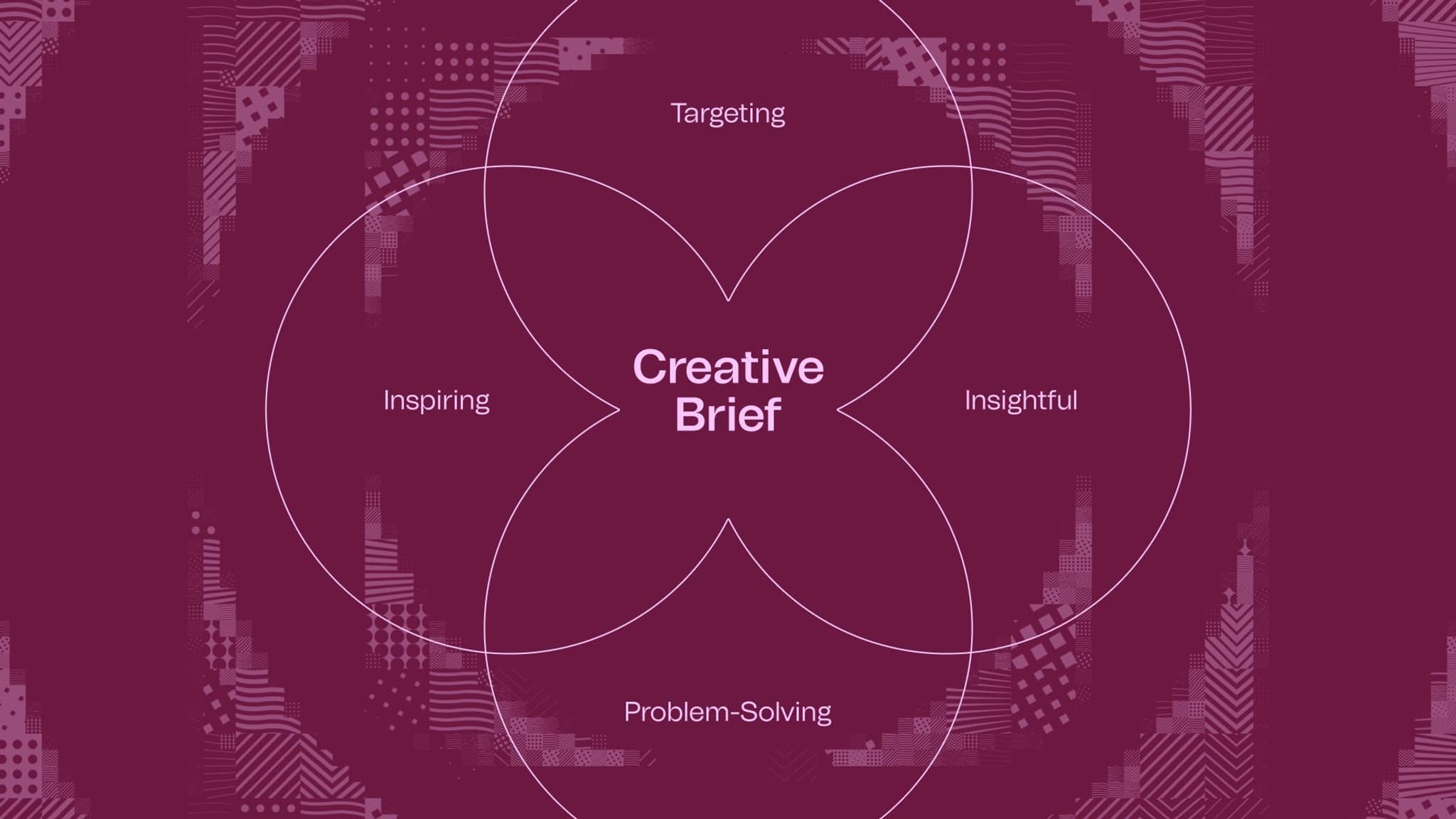
Creativity does not need a blank page. It needs a meaningful problem, a person worth helping, a point of view, and enough constraint to make choices matter.
That is what a creative brief should provide. Not a recipe. Not a formality. A shared decision about the change the work is here to make.
Write the brief with enough courage to leave things out. The space it creates is where better ideas can become useful.